
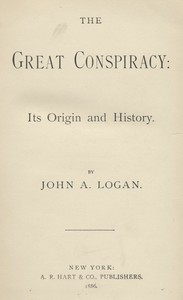
The Great Conspiracy, Volume 4
Written by John Alexander Logan
Chaptra reads alongside you — AI insights, chapter breakdowns and reader discussions for every book. Join free
About this book
Reading guide
Themes, characters and key ideas in The Great Conspiracy, Volume 4, written by Chaptra AI.
- about 8 hours
- advanced
- informative
- somber
- analytical
John Alexander Logan's "The Great Conspiracy, Volume 4" offers a late 19th-century historical examination of the American Civil War, focusing intensely on the genesis and evolution of the conflict through the lens of slavery. The volume meticulously traces the institution's role from pre-war tensions, citing figures like Patrick Henry and John Quincy Adams, to its critical impact on military and political strategies following Fort Sumter. Logan details the complex debates among Union generals regarding the treatment of escaped enslaved individuals, revealing the moral and strategic quandaries of the era. Ultimately, the narrative highlights a crucial shift towards recognizing emancipation as both a military necessity and a moral imperative, laying the groundwork for profound legislative changes.
Key themes
- Slavery and its Abolition
- This is the central theme, exploring slavery not just as a moral issue but as the fundamental cause of the Civil War and the primary driver of political and military strategy. Logan details how the institution of slavery shaped national identity, fueled sectional conflict, and ultimately led to its own demise through emancipation.
- Moral and Strategic Dilemmas of War
- The book delves into the complex choices faced by Union leaders, particularly regarding the status of enslaved individuals. It highlights the tension between military pragmatism (e.g., using freed slaves as soldiers or denying resources to the Confederacy) and moral imperatives (e.g., the inherent right to freedom), showing how these often converged.
- Political Evolution and Leadership
- Logan chronicles the evolution of political thought and policy within the Union leadership, demonstrating how initial hesitancy and conflicting views gave way to a more unified and decisive stance on emancipation. It showcases the role of key figures in navigating these changes and shaping national policy during a crisis.
Worth discussing
How does Logan's late 19th-century perspective influence his interpretation of the Civil War and slavery?
Chapter-by-chapter breakdowns, character arcs and the full thematic analysis come with a free account.
Discussions
No one has started one yet
Questions this book opens up
No discussions yet
Be the first to start a discussion about this book!
Sign up to start the discussionReviews
No reviews yet
Be the first to review this book!