
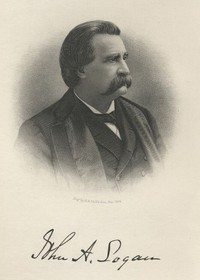
The Great Conspiracy, Complete
Written by John Alexander Logan
Chaptra reads alongside you — AI insights, chapter breakdowns and reader discussions for every book. Join free
About this book
Reading guide
Themes, characters and key ideas in The Great Conspiracy, Complete, written by Chaptra AI.
- about 25 hours
- advanced
- serious
- analytical
- historical
John Alexander Logan's "The Great Conspiracy, Complete" is a comprehensive late 19th-century historical account positing that the American Civil War was the culmination of a deliberate, long-standing conspiracy by Southern political elites to dissolve the Union and perpetuate slavery. The work meticulously traces the evolution of slavery from the nation's founding, through key legislative battles and sectional crises, to the ultimate secession and armed conflict. Logan, writing from a Unionist perspective, aims to present a factual, albeit interpretative, narrative of the political maneuvering, economic forces, and ideological clashes that he argues were orchestrated by Southern leaders to achieve their objectives. It serves as both a historical record and a significant artifact of post-Civil War Northern sentiment regarding the conflict's origins.
“"The struggle was not merely for the preservation of the Union, but for the very principles of human liberty and democratic government."”
Key themes
- The Great Conspiracy
- This is the central organizing principle of Logan's work, positing that Southern political leaders engaged in a deliberate, long-term plot to undermine the Union and establish a separate slaveholding confederacy. Logan details how legislative actions, political rhetoric, and judicial decisions were all orchestrated as part of this grand scheme, rather than being mere reactions to events.
- Slavery as the Root Cause of Conflict
- Logan adamantly argues that slavery, and the economic and social system it upheld, was the irreducible cause of the Civil War. He dismisses other factors like 'States' Rights' as pretexts, asserting that the desire to preserve and expand slavery drove all the actions of the 'conspirators.' This theme highlights the moral and practical impossibility of a nation half-slave and half-free.
- Sectionalism and National Unity
- The book meticulously details how the nation fractured along sectional lines, primarily North and South, due to divergent economic interests, social structures, and moral stances on slavery. Logan illustrates how political compromises became increasingly difficult, leading to an erosion of national unity and a growing sense of distinct regional identities that ultimately culminated in civil war.
Worth discussing
How does Logan's 'conspiracy' framework influence his historical narrative, and what are its strengths and weaknesses?
Chapter-by-chapter breakdowns, character arcs and the full thematic analysis come with a free account.
Discussions
No one has started one yet
Questions this book opens up
No discussions yet
Be the first to start a discussion about this book!
Sign up to start the discussionReviews
No reviews yet
Be the first to review this book!