
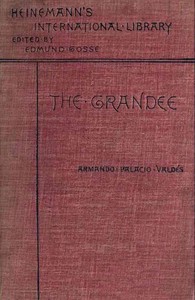
The Grandee
Written by Armando Palacio Valdés
Chaptra reads alongside you — AI insights, chapter breakdowns and reader discussions for every book. Join free
About this book
Reading guide
Themes, characters and key ideas in The Grandee, written by Chaptra AI.
- about 8 hours
- intermediate
- melancholy
- social commentary
- introspective
Armando Palacio Valdés's "The Grandee" is a late 19th-century Spanish novel set in the provincial city of Lancia, focusing on the aristocratic Don Pedro Quiñones de Leon. The aging grandee struggles to uphold his dignity and status amidst a changing society and personal afflictions, including paralysis. The narrative opens on a wintry night, establishing an atmospheric setting and introducing Don Pedro's complex interactions during a social gathering. It delves into themes of societal hierarchy, pride, and the intricate dynamics of family life, particularly the strained relationship with his wife, Amalia. The novel promises a deep exploration of character motivations, unfulfilled desires, and the darker undercurrents beneath the veneer of respectability.
“"Dignity, my dear friend, is not a garment one can simply shed when the fashion changes; it is the very bone structure of a gentleman."”
Key themes
- Pride and Dignity
- Central to Don Pedro's character, this theme explores the psychological weight and complexities of personal pride and the relentless pursuit of dignity. For Don Pedro, dignity is not just a personal attribute but an inherited burden and a performative necessity tied to his grandee status. The novel delves into how pride can be both a source of strength and a destructive force, leading to isolation, rigidity, and an inability to adapt to changing circumstances or personal realities.
- Societal Hierarchy and Change
- The novel critically examines the rigid social hierarchy of late 19th-century Spain and the profound impact of its slow but inevitable dissolution. It explores the clash between the old aristocracy, represented by Don Pedro, and the emerging values of a more modern, perhaps bourgeois, society. This theme delves into the struggle of individuals whose identity and sense of worth are inextricably linked to their inherited status in a world that increasingly values wealth, pragmatism, or new forms of power.
- Family Relationships and Unfulfilled Desires
- The novel deeply explores the intricacies and often painful realities of family relationships, particularly focusing on the 'strained marriage' between Don Pedro and Amalia. This theme delves into the unspoken tensions, resentments, and unfulfilled desires that can fester within a domestic sphere, especially when compounded by societal expectations, personal afflictions, and the weight of tradition. It examines how individual happiness can be sacrificed at the altar of appearance and status.
Worth discussing
How does Don Pedro's physical paralysis serve as a metaphor for his societal and personal struggles?
Chapter-by-chapter breakdowns, character arcs and the full thematic analysis come with a free account.
Discussions
No one has started one yet
Questions this book opens up
No discussions yet
Be the first to start a discussion about this book!
Sign up to start the discussionReviews
No reviews yet
Be the first to review this book!