
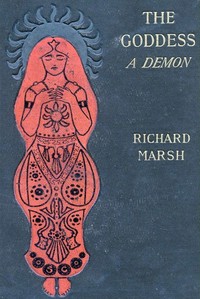
The goddess: a demon
Written by Richard Marsh
Chaptra reads alongside you — AI insights, chapter breakdowns and reader discussions for every book. Join free
About this book
Reading guide
Themes, characters and key ideas in The goddess: a demon, written by Chaptra AI.
- about 8 hours
- intermediate
- dark
- mysterious
- suspenseful
Richard Marsh's late 19th-century novel, "The Goddess: A Demon," plunges John Ferguson into a nightmarish ordeal after a gambling session with his friend, Edwin Lawrence. A tumultuous dream leads Ferguson to discover Lawrence in a violent struggle with a mysterious, frenzied woman, who subsequently appears in Ferguson's own room, covered in blood and suffering from amnesia. This enigmatic figure becomes central to a burgeoning murder investigation, drawing Ferguson into a web of dark secrets and supernatural undertones. The narrative skillfully blends psychological suspense with elements of the uncanny, keeping readers gripped as Ferguson races to uncover the truth behind the woman's identity and the gruesome events before he becomes irrevocably entangled in the escalating danger.
“"The line between nightmare and waking reality had blurred, leaving me adrift in a sea of terrifying uncertainty."”
Key themes
- Perception vs. Reality / The Fragility of Sanity
- The novel constantly challenges the reader's and protagonist's understanding of what is real. Ferguson's experiences often blur the lines between dreams, hallucinations, and tangible events, leading to profound psychological distress. This theme explores how easily one's perception can be distorted by fear, guilt, and the uncanny, questioning the reliability of the human mind.
- Guilt and Complicity
- John Ferguson's initial guilt over his gambling losses sets a moral tone for the novel, which deepens as he becomes unwillingly complicit in a murder investigation. The theme explores the burden of conscience, the slippery slope of moral compromise, and how guilt can drive actions and distort perceptions, even when one is not directly responsible for a crime.
- The Uncanny and the Supernatural
- Marsh masterfully employs elements of the uncanny, where the familiar becomes unsettlingly strange, to create a pervasive sense of dread. The mysterious woman, with her unknown origins and inexplicable actions, embodies this. The theme explores humanity's fear of the unknown, the violation of natural order, and the possibility of forces beyond human comprehension, characteristic of late Victorian Gothic and paranormal fiction.
Worth discussing
How does Marsh blur the lines between supernatural horror and psychological thriller? Where do you think the 'demon' truly resides?
Chapter-by-chapter breakdowns, character arcs and the full thematic analysis come with a free account.
Discussions
No one has started one yet
Questions this book opens up
No discussions yet
Be the first to start a discussion about this book!
Sign up to start the discussionReviews
No reviews yet
Be the first to review this book!