
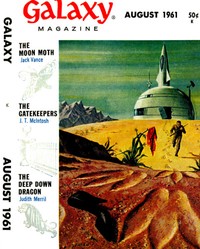
The God Next Door
Written by William R. Doede
Chaptra reads alongside you — AI insights, chapter breakdowns and reader discussions for every book. Join free
About this book
Reading guide
Themes, characters and key ideas in The God Next Door, written by Chaptra AI.
- about 8 hours
- intermediate
- mysterious
- philosophical
- tense
William R. Doede's "The God Next Door," an early 1960s science fiction novel, plunges protagonist Stinson into an existential crisis on a desolate alien planet. Tasked with assessing its viability for life, Stinson inadvertently becomes deified by the indigenous web-footed humanoids and confronts powerful, enigmatic entities like the Sand God. His journey is complicated by a mysterious woman claiming to be his wife and the moral quandaries arising from his advanced technology clashing with primitive alien instincts. Ultimately, Stinson must reconcile his newfound divine status with his humanity, weigh the responsibilities of immense power, and decide the fate of both himself and this alien civilization.
“"To be worshipped is a burden far heavier than any cross one might carry."”
Key themes
- Nature of Godhood and Deification
- The novel critically examines what it means to be perceived as a god, not through inherent divinity but through the eyes of a less advanced civilization. It explores the burdens, responsibilities, and moral dilemmas that come with accidental deification, forcing Stinson to confront the implications of wielding immense, perceived power.
- Identity and Self-Discovery
- Stinson's journey is fundamentally one of self-discovery, fueled by the challenges to his identity. His accidental deification forces him to question who he is beyond his human origins, while the mysterious woman's claims about their past further destabilize his sense of self and reality.
- Moral Responsibility and Ethics of Power
- The novel deeply explores the ethical responsibilities that accompany power, particularly when one possesses advanced capabilities compared to others. Stinson's moral dilemmas center on whether to intervene, how to protect, and the consequences of his actions on an alien civilization that perceives him as omnipotent.
Worth discussing
How does Stinson's accidental deification challenge our understanding of power and responsibility?
Chapter-by-chapter breakdowns, character arcs and the full thematic analysis come with a free account.
Discussions
No one has started one yet
Questions this book opens up
No discussions yet
Be the first to start a discussion about this book!
Sign up to start the discussionReviews
No reviews yet
Be the first to review this book!