
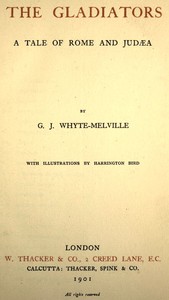
The Gladiators. A Tale of Rome and Judæa
Written by G. J. (George John) Whyte-Melville
Chaptra reads alongside you — AI insights, chapter breakdowns and reader discussions for every book. Join free
About this book
Reading guide
Themes, characters and key ideas in The Gladiators. A Tale of Rome and Judæa, written by Chaptra AI.
- about 8 hours
- intermediate
- Epic
- Tragic
- Romantic
G. J. Whyte-Melville's "The Gladiators" is a late 19th-century historical novel set against the tumultuous backdrop of the Roman Empire and its subjugation of various cultures, particularly Judaea. The narrative centers on Esca, a British slave of noble lineage, who navigates the brutal realities of Roman society, from the gladiator arena to the opulent halls of the aristocracy. His journey is complicated by the burgeoning interest of Valeria, a Roman noblewoman captivated by his strength and exoticism, creating a compelling tension between different social strata and personal desires. The story explores profound themes of power, sacrifice, and the search for identity amidst cultural collision, often through vivid dream sequences and intense combat scenes that reflect Esca's internal and external struggles. Ultimately, it paints a picture of individual resilience against the overwhelming might of an empire, challenging notions of freedom and belonging.
“"The chains of Rome might bind the body, but the spirit of a free man could never be truly broken."”
Key themes
- Power and Oppression
- This theme is central, explored through the Roman Empire's subjugation of foreign lands and peoples, particularly the enslavement of Esca. It delves into the brutal realities of Roman military and political might, the dehumanizing effects of slavery, and the psychological impact of being powerless. The gladiator arena serves as a microcosm of this theme, where life and death are dictated by the whims of the powerful.
- Identity and Belonging
- Esca's journey is fundamentally a quest for identity. Stripped of his heritage and forced into a new, brutal role, he struggles to reconcile his past as a free British warrior with his present as a Roman slave. The theme explores how identity is shaped by culture, status, and personal agency, and the profound sense of displacement when one loses their place in the world.
- Sacrifice and Survival
- This theme examines the choices characters make to survive and the sacrifices they are forced or choose to make. It explores the moral compromises, physical endurance, and emotional toll exacted by a brutal world. Esca's willingness to fight in the arena, and Valeria's potential risk to her social standing for love, exemplify the different forms of sacrifice.
Worth discussing
How does Whyte-Melville use the dream sequence at the beginning to establish key themes and foreshadow Esca's journey?
Chapter-by-chapter breakdowns, character arcs and the full thematic analysis come with a free account.
Discussions
No one has started one yet
Questions this book opens up
No discussions yet
Be the first to start a discussion about this book!
Sign up to start the discussionReviews
No reviews yet
Be the first to review this book!