
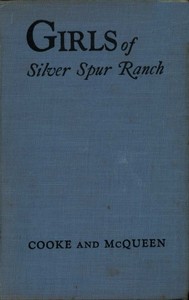
The Girls of Silver Spur Ranch
Written by Grace MacGowan Cooke,Anne McQueen
Chaptra reads alongside you — AI insights, chapter breakdowns and reader discussions for every book. Join free
About this book
Reading guide
Themes, characters and key ideas in The Girls of Silver Spur Ranch, written by Chaptra AI.
- about 8 hours
- intermediate
- uplifting
- humorous
- heartfelt
Set in early 20th-century Texas, "The Girls of Silver Spur Ranch" follows the Spooner sisters—Mary, Elizabeth, Ruth, and Harvie—as they navigate life on their modest cattle ranch. The narrative primarily focuses on Elizabeth, a young woman grappling with feelings of otherness and a desire for a life beyond her family's humble circumstances. Amidst preparations for her eldest sister Mary's wedding, Elizabeth's aspirations are tested by the harsh realities of ranch life and a budding empathy for a marginalized family of "movers." The story weaves together themes of self-discovery, the enduring power of familial love, and the pursuit of individual dreams, all while hinting at a deeper mystery surrounding Elizabeth's true lineage that promises to redefine her understanding of self and family.
“"Spooner! It sounds so... ordinary. I was meant for more than ordinary, I'm sure of it."”
Key themes
- Self-Discovery and Identity
- This is the central theme, primarily explored through Elizabeth's journey. She begins with a strong sense of being 'different' and a desire for a grander identity, often rejecting her humble roots. The narrative traces her internal struggle to reconcile her aspirations with her reality, culminating in the potential revelation of her true lineage and a more authentic understanding of who she is.
- Familial Love and Sisterhood
- Despite Elizabeth's personal conflicts, the bond among the Spooner sisters forms the emotional backbone of the novel. The story celebrates the enduring strength, humor, and support found within a close-knit family, particularly among siblings. It explores how family dynamics can be both a source of comfort and contention, ultimately fostering growth.
- Aspiration vs. Reality
- This theme examines the tension between one's grand dreams and the often-humble or challenging circumstances of their life. Elizabeth's longing for a life of refinement clashes with the practical, demanding existence on a Texas cattle ranch. The narrative explores how embracing or rejecting reality shapes one's character and path.
Worth discussing
How do Elizabeth's initial feelings of superiority and disdain for her family name evolve throughout the story? What specific events or interactions contribute to this change?
Chapter-by-chapter breakdowns, character arcs and the full thematic analysis come with a free account.
Discussions
No one has started one yet
Questions this book opens up
No discussions yet
Be the first to start a discussion about this book!
Sign up to start the discussionReviews
No reviews yet
Be the first to review this book!