
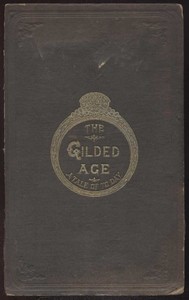
The Gilded Age: A Tale of Today
Written by Mark Twain,Charles Dudley Warner
Chaptra reads alongside you — AI insights, chapter breakdowns and reader discussions for every book. Join free
About this book
Reading guide
Themes, characters and key ideas in The Gilded Age: A Tale of Today, written by Chaptra AI.
- about 12 hours
- advanced
- satirical
- cynical
- humorous
Mark Twain and Charles Dudley Warner's "The Gilded Age: A Tale of Today" is a biting satirical novel that chronicles the rampant greed, political corruption, and speculative fever gripping post-Civil War America. The narrative follows several intertwined storylines, primarily focusing on the naive Hawkins family's ill-fated land schemes and the ambitious, morally ambiguous Laura Hawkins's ascent and tragic fall in Washington D.C. Through a cast of memorable characters, including the eternally optimistic Colonel Sellers and the venal Senator Dilworthy, the authors expose the era's materialistic obsessions and the often-disastrous pursuit of wealth and status. The book, which famously coined the term "The Gilded Age," serves as a critical mirror reflecting the moral decay beneath the superficial glitter of prosperity.
“"There are millions in it, Silas, millions in it!"”
Key themes
- Greed and Corruption
- This is the central theme, permeating every aspect of the novel. It explores how the pursuit of wealth, often through dishonest means, infects individuals and institutions, from land speculation and political bribery to social climbing and personal relationships. The book vividly portrays a society where moral integrity is routinely sacrificed for financial gain.
- The American Dream (Distorted)
- The novel examines the American Dream not as a pursuit of freedom or self-improvement, but as a relentless, often desperate, quest for material wealth and social status. It shows how this dream becomes corrupted by avarice, leading to widespread disillusionment and moral decay, as characters chase illusions of prosperity rather than tangible achievements.
- Speculation and Illusion
- A key theme illustrating the economic instability and psychological mindset of the Gilded Age. Characters are constantly engaged in speculative ventures—from worthless land to dubious inventions—believing in the illusion of quick riches rather than investing in honest labor. This theme highlights the fragility of the era's economic boom and the human tendency to be swayed by false hope.
Worth discussing
How does the concept of the "American Dream" manifest in the novel, and how is it satirized or critiqued?
Chapter-by-chapter breakdowns, character arcs and the full thematic analysis come with a free account.
Discussions
No one has started one yet
Questions this book opens up
No discussions yet
Be the first to start a discussion about this book!
Sign up to start the discussionReviews
No reviews yet
Be the first to review this book!