
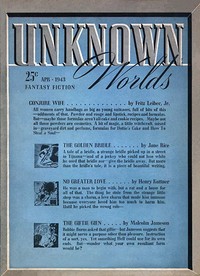
The giftie gien
Written by Malcolm Jameson
Chaptra reads alongside you — AI insights, chapter breakdowns and reader discussions for every book. Join free
About this book
Reading guide
Themes, characters and key ideas in The giftie gien, written by Chaptra AI.
- about 8 hours
- intermediate
- Thought-provoking
- Reflective
- Cautionary
Malcolm Jameson's 'The giftie gien' explores the profound implications of an extraordinary ability to perceive the true nature of individuals, granting its recipient an unsettling clarity beyond superficial appearances. The story follows a protagonist who acquires this unique 'gift,' initially finding it revelatory, but soon discovering the heavy burden of unvarnished truth. It delves into the psychological and social ramifications of seeing others—and oneself—without the comforting filters of illusion, forcing a re-evaluation of human connection and the very fabric of society. Ultimately, it serves as a cautionary tale about the double-edged sword of insight and the delicate balance between truth and harmony.
“The gift, as I had so naively called it, was no blessing; it was a curse, a relentless mirror reflecting every hidden flaw.”
Key themes
- Perception vs. Reality
- This is the central theme, exploring the profound chasm between how things appear and how they truly are. The 'gift' forces the protagonist to confront this disparity, revealing that much of human interaction and societal stability relies on a shared, often comforting, illusion. The theme questions the nature of truth itself—is it objective, or is it shaped by our capacity (or incapacity) to perceive it fully?
- The Burden of Knowledge
- This theme explores the psychological and emotional cost of possessing overwhelming or uncomfortable knowledge. While knowledge is often equated with power or enlightenment, the story demonstrates how too much truth, especially about human imperfection, can lead to isolation, disillusionment, and profound unhappiness. It questions whether humanity is truly equipped to handle absolute honesty.
- Human Nature and Morality
- The story acts as a deep dive into the fundamental aspects of human nature, often revealing a less flattering picture than commonly presented. It explores the inherent selfishness, petty motivations, and unconscious biases that drive individuals, even in seemingly altruistic actions. This forces a re-evaluation of morality—is it a genuine internal compass, or merely a social construct maintained by the inability to see true intentions? It questions if true virtue can exist when all motivations are laid bare.
Worth discussing
If you possessed the 'gift' described in the story, would you use it, and how do you think it would change your relationships?
Chapter-by-chapter breakdowns, character arcs and the full thematic analysis come with a free account.
Discussions
No one has started one yet
Questions this book opens up
No discussions yet
Be the first to start a discussion about this book!
Sign up to start the discussionReviews
No reviews yet
Be the first to review this book!