
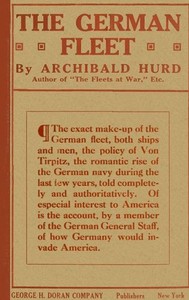
The German Fleet: Being The Companion Volume to "The Fleets At War" and "From Heligoland To Keeling Island
Written by Archibald Hurd
Chaptra reads alongside you — AI insights, chapter breakdowns and reader discussions for every book. Join free
About this book
Reading guide
Themes, characters and key ideas in The German Fleet: Being The Companion Volume to "The Fleets At War" and "From Heligoland To Keeling Island, written by Chaptra AI.
- about 12 hours
- advanced
- informative
- analytical
- historical
Archibald Hurd's "The German Fleet" offers a meticulous historical examination of Germany's naval development from its nascent stages to its formidable pre-World War I status. The book traces the nation's maritime ambitions, highlighting the transition from the commercial prowess of the Hanseatic League to the unified German Empire's strategic pursuit of a powerful battle fleet. Hurd explores the complex interplay of military, economic, and cultural factors that fueled this naval expansion, framing it as an integral component of Germany's burgeoning national identity and geopolitical aspirations. It serves as a crucial contemporary account of the naval arms race that characterized early 20th-century Europe.
“"The sea, which had for centuries been the highway of German commerce, was now to become the arena of German power."”
Key themes
- National Identity and Ambition
- The book meticulously explores how the development of the German Fleet was deeply intertwined with the formation of a unified German national identity and its aspirations for global power. The navy became a potent symbol of Germany's 'place in the sun,' representing a departure from its continental focus to a more outward-looking, imperialistic vision. Hurd argues that the fleet was not merely a military tool but a crucial element in forging a collective sense of national pride and destiny.
- The Strategic Importance of Sea Power
- Hurd extensively details the strategic thinking behind Germany's naval build-up, emphasizing the belief that sea power was essential for national security, economic prosperity, and colonial ambitions. The book outlines the 'Risk Fleet' theory and the broader geopolitical context of the Anglo-German naval arms race, illustrating how control of the seas was perceived as paramount for global influence and trade protection.
- Geopolitical Rivalry and the Arms Race
- Hurd's analysis is steeped in the geopolitical context of early 20th-century Europe, particularly the intense naval rivalry between Germany and Great Britain. The book implicitly and explicitly discusses how Germany's naval expansion was perceived as a direct challenge to British naval supremacy, contributing significantly to the escalating tensions that preceded World War I. It portrays the naval arms race as a dangerous cycle of build-up and counter-build-up.
Worth discussing
How did the historical legacy of the Hanseatic League influence Germany's later naval ambitions?
Chapter-by-chapter breakdowns, character arcs and the full thematic analysis come with a free account.
Discussions
No one has started one yet
Questions this book opens up
No discussions yet
Be the first to start a discussion about this book!
Sign up to start the discussionReviews
No reviews yet
Be the first to review this book!