
About this book
Reading guide
Themes, characters and key ideas in The Gâtakamâlâ; Or, Garland of Birth-Stories, written by Chaptra AI.
- about 20 hours
- advanced
- uplifting
- spiritual
- inspirational
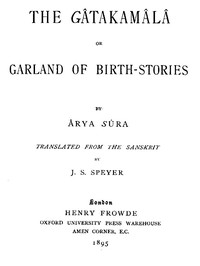
Aryasura's "The Gâtakamâlâ; Or, Garland of Birth-Stories" is a foundational collection of Buddhist moral tales from the first century CE, recounting the previous lives of the Buddha (Bodhisattva). Each 'Gâtaka' story serves as a didactic narrative, illustrating core Buddhist virtues such as profound compassion, self-sacrifice, and the intricate workings of karma. Beyond its narrative entertainment, the work functions as essential spiritual guidance, urging readers towards altruism and ethical conduct through vivid examples. The collection opens powerfully with the Bodhisattva's contemplation of self-sacrifice to save a starving tigress and her cubs, setting a high standard for selfless love and empathy. Through rich prose and poetic verses, the Gâtakamâlâ invites deep reflection on the path to enlightenment and the significance of ethical living.
“"For the sake of others, I would offer my very flesh, my life, without a flicker of regret, for compassion is my sole delight."”
Key themes
- Compassion (Karuṇā)
- Compassion is the foundational and most prominent theme, central to every story. The Bodhisattva consistently demonstrates boundless empathy and a profound desire to alleviate the suffering of all beings, often at great personal cost. This theme is explored through acts of selfless giving, protection, and even self-sacrifice, illustrating that true compassion extends beyond mere sympathy to active, unconditional love.
- Self-Sacrifice (Dāna Pāramitā)
- Closely linked with compassion, self-sacrifice is a recurring motif where the Bodhisattva willingly gives up his life, body, possessions, or status for the greater good of others. This theme emphasizes the ultimate detachment from self and the profound commitment to altruism, highlighting that true generosity knows no bounds and is driven by an enlightened understanding of interconnectedness.
- Karma and Rebirth
- The entire framework of the Gâtakamâlâ rests on the Buddhist principles of karma (action) and rebirth (saṃsāra). Each story illustrates how virtuous actions in one life lead to favorable conditions and progress towards enlightenment in future lives, while negative actions lead to suffering. This theme provides a cosmic moral order, emphasizing accountability for one's deeds and the long-term spiritual consequences of ethical choices.
Worth discussing
How does the concept of karma, as depicted in these stories, influence the Bodhisattva's actions and our understanding of ethical responsibility?
Chapter-by-chapter breakdowns, character arcs and the full thematic analysis come with a free account.
Discussions
No one has started one yet
Questions this book opens up
No discussions yet
Be the first to start a discussion about this book!
Sign up to start the discussionReviews
No reviews yet
Be the first to review this book!