
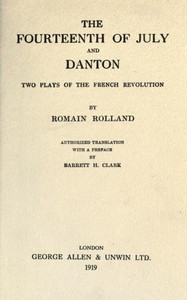
The Fourteenth of July, and Danton: Two Plays of the French Revolution
Written by Romain Rolland
Chaptra reads alongside you — AI insights, chapter breakdowns and reader discussions for every book. Join free
About this book
Reading guide
Themes, characters and key ideas in The Fourteenth of July, and Danton: Two Plays of the French Revolution, written by Chaptra AI.
- about 8 hours
- advanced
- intense
- historic
- tragic
Romain Rolland's "The Fourteenth of July, and Danton" presents two powerful historical plays dramatizing pivotal moments of the French Revolution. The first play vividly captures the escalating tension and collective fervor of the Parisian populace leading up to the storming of the Bastille, emphasizing the emergence of the 'People' as a unified, driving force for change. The second play, "Danton," delves into the complex moral and political struggles of one of the revolution's most iconic figures, exploring themes of leadership, sacrifice, and the often-brutal realities of revolutionary justice. Together, the plays offer a nuanced examination of liberty, social justice, and the moral complexities inherent in movements driven by the collective will against oppressive forces, contrasting initial revolutionary idealism with its later, more tragic consequences.
“"We are the People, and the People will not be silent! Let the Bastille tremble, for its stones are built on our chains!"”
Key themes
- The Will of the People vs. Individual Leadership
- Rolland explores the tension between the spontaneous, often chaotic, power of the collective will and the guiding, sometimes dictatorial, influence of individual leaders. 'The Fourteenth of July' celebrates the former, showing the masses as the true engine of change, while 'Danton' examines the challenges and tragedies inherent when individual leaders attempt to control or direct this collective force.
- Liberty and Tyranny
- At the core of both plays is the fundamental struggle between the desire for liberty and the oppressive forces of tyranny. The plays dramatize the breaking of chains, but also the potential for a new form of tyranny to emerge from the ashes of the old, raising questions about the true meaning and cost of freedom.
- Justice and Morality in Revolution
- Rolland delves into the complex ethical landscape of revolutionary movements, questioning what constitutes justice during periods of radical change. The plays explore whether ends justify means, the morality of violence for a cause, and the internal conflicts faced by those who must make impossible choices in the name of a new order.
Worth discussing
How do Rolland's plays portray the concept of 'The People' as a character, and what are the implications of this approach?
Chapter-by-chapter breakdowns, character arcs and the full thematic analysis come with a free account.
Discussions
No one has started one yet
Questions this book opens up
No discussions yet
Be the first to start a discussion about this book!
Sign up to start the discussionReviews
No reviews yet
Be the first to review this book!