
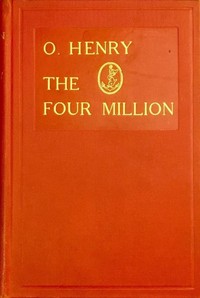
About this book
Read it with a club
Chaptra's fiction clubs — small groups reading the same books and talking as they go.


CraxMe Readers Book Club
Fiction
- 385 members
- 227 discussions
- Started December 2025
Welcome to the Readers Book Club. This is an informal group for like-minded people, where you can discuss books, share and recommend, track your reading progress, and lots more. Discuss Books — all about books. Discuss a particular book or genre, share your favourite quotes. Book Reviews — loved a book and highly recommend it? Or was it just average? Share your review and discuss with fellow readers. (May contain spoilers.) Group Reads — what is a book club without a group read! Buddy Reads — planning to read a book and looking for someone to read it with? Post in the Buddy Read request thread, find a reading buddy, and start discussing.
Read The Four Million alongside people who are reading it too.
Also here: Doorstops, First Lines Club
Chaptra Prime — paid clubs, every club feature, and unlimited reading support, for $5 a month or $60 once.
See PrimeReading guide
Themes, characters and key ideas in The Four Million, written by Chaptra AI.
- about 10 hours
- intermediate
- humorous
- poignant
- ironic
O. Henry's "The Four Million" is a seminal collection of short stories that vividly portrays the bustling, diverse lives of ordinary New Yorkers at the turn of the 20th century. Through a masterful blend of humor, irony, and pathos, the book explores the daily struggles, quiet joys, and unexpected turns of fate experienced by clerks, artists, shopgirls, and dreamers. Each story, often culminating in a famous surprise ending, offers a snapshot of urban existence, revealing the interconnectedness and often ironic nature of human aspirations and realities in the vast metropolis. The collection captures a specific historical moment while delving into timeless themes of love, sacrifice, class, and the pursuit of happiness.
“There are 400,000 people in New York who have cars, yachts and boxes at the opera. There are 4,000,000 people who do not.”
Key themes
- Irony and Coincidence
- A cornerstone of O. Henry's style, this theme explores how fate, chance, and unexpected turns often dictate human outcomes. Stories frequently culminate in ironic twists where characters' efforts or expectations are subverted by unforeseen circumstances, often with a humorous or poignant effect.
- Urban Life and Anonymity
- The collection vividly portrays New York City as a character in itself, exploring the paradox of loneliness within a bustling crowd. It highlights how the city shapes its inhabitants, offering both opportunity and hardship, and how individuals navigate its vastness while yearning for connection.
- Social Class and Aspiration
- The collection offers a keen look at the social stratification of early 20th-century New York, exploring the struggles, dreams, and interactions between people from different economic backgrounds. Characters often aspire to move beyond their current circumstances, driven by love, ambition, or the desire for a better life.
Worth discussing
How does O. Henry use the city of New York as a character in itself? What aspects of urban life does he highlight?
Chapter-by-chapter breakdowns, character arcs and the full thematic analysis come with a free account.
Discussions
No one has started one yet
Questions this book opens up
No discussions yet
Be the first to start a discussion about this book!
Sign up to start the discussionReviews
No reviews yet
Be the first to review this book!