
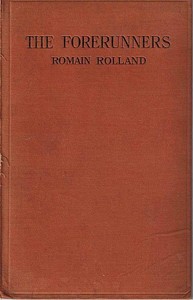
The Forerunners
Written by Romain Rolland
Chaptra reads alongside you — AI insights, chapter breakdowns and reader discussions for every book. Join free
About this book
Reading guide
Themes, characters and key ideas in The Forerunners, written by Chaptra AI.
- about 10 hours
- advanced
- reflective
- earnest
- challenging
Romain Rolland's "The Forerunners" is a poignant collection of essays penned during the harrowing years of World War I, serving as a powerful testament to the resilience of the human spirit amidst widespread conflict. Dedicated to those who championed a new internationalism, the work explores the intellectual and moral struggles of individuals who dared to resist the prevailing tide of hatred and violence. Rolland, writing from Switzerland between 1915 and 1919, spotlights figures like Maxim Gorki and Bertrand Russell, illustrating their commitment to peace, human solidarity, and independent thought. The collection ultimately aims to inspire hope and reflection, urging readers to remember humanity's capacity for good and to strive for a more united and peaceful future through shared struggle and intellectual courage.
“"The true hero is he who dares to be himself, even when it means standing alone against the tide."”
Key themes
- Pacifism and Anti-War Sentiment
- This is the foundational theme of the collection. Rolland vehemently opposes the brutality and irrationality of war, critiquing the nationalism and hatred that fueled World War I. He advocates for peace not merely as an absence of conflict but as a positive, active state of human cooperation and understanding.
- Human Solidarity and Internationalism
- Rolland champions the idea that humanity is a single, interconnected entity, and that national borders and ethnic differences should not override a shared sense of human solidarity. He envisions a 'Republic of Free Spirits' where intellectuals and compassionate individuals from all nations unite in common cause for peace and progress.
- The Power of Independent Thought and Conscience
- Rolland emphasizes the critical role of individual conscience and the courage to think independently, especially when confronting prevailing societal narratives or wartime propaganda. He celebrates those who dare to question authority and uphold moral principles, even at personal risk, seeing them as essential catalysts for societal change.
Worth discussing
How does Rolland define 'the forerunners,' and what qualities do they embody that he believes are essential for societal progress?
Chapter-by-chapter breakdowns, character arcs and the full thematic analysis come with a free account.
Discussions
No one has started one yet
Questions this book opens up
No discussions yet
Be the first to start a discussion about this book!
Sign up to start the discussionReviews
No reviews yet
Be the first to review this book!