
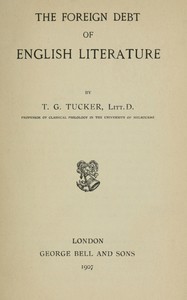
The foreign debt of English literature
Written by T. G. (Thomas George) Tucker
Chaptra reads alongside you — AI insights, chapter breakdowns and reader discussions for every book. Join free
About this book
Reading guide
Themes, characters and key ideas in The foreign debt of English literature, written by Chaptra AI.
- about 12 hours
- advanced
- scholarly
- analytical
- informative
T. G. Tucker's "The Foreign Debt of English Literature" is an early 20th-century scholarly work that meticulously explores the profound interconnections and influences between English literature and various foreign literary traditions. It argues that English literature did not develop in isolation but rather evolved through significant borrowings and contributions from other cultures, particularly emphasizing the foundational role of Greek literature in shaping the broader European and English literary landscape. The book offers a comparative analysis, detailing how English writers, from Chaucer to Shakespeare, have drawn inspiration and structural elements from Greek, Latin, French, Italian, and Spanish literary sources. Tucker's central premise is that a comprehensive understanding and appreciation of English literary identity necessitates an acknowledgment of this extensive literary 'debt' to its international predecessors and contemporaries. Through this lens, the work illuminates the rich, multicultural tapestry underlying what is often perceived as a singular national tradition.
“"A thorough appreciation of English literature must include an understanding of its interactions with other literary traditions."”
Key themes
- Literary Interconnectedness and Influence
- This is the core theme, asserting that no literature develops in isolation. Tucker meticulously demonstrates how English literature is a product of continuous dialogue and exchange with other traditions, highlighting the global and trans-historical nature of literary creation. It explores the pathways through which ideas, forms, and narratives travel across cultures.
- The Concept of 'Foreign Debt' and Cultural Borrowing
- Tucker introduces the powerful metaphor of 'debt' to describe the extensive borrowings English literature has made from other cultures. This theme examines the nature of these borrowings—whether conscious or unconscious, direct or indirect—and the implications of acknowledging such a debt for understanding literary originality and identity. It questions how much a culture 'owes' to its predecessors and neighbors.
- Foundational Role of Classical Antiquity
- A significant facet of the 'foreign debt' is the profound and enduring influence of Greek and Latin literature on English and, more broadly, European literary history. This theme highlights how classical myths, philosophical ideas, literary forms (epic, tragedy, lyric), and rhetorical principles provided a bedrock upon which later literary traditions were built, continuously informing and inspiring subsequent generations of writers.
Worth discussing
To what extent does acknowledging a 'foreign debt' diminish or enhance the perceived originality and genius of English authors?
Chapter-by-chapter breakdowns, character arcs and the full thematic analysis come with a free account.
Discussions
No one has started one yet
Questions this book opens up
No discussions yet
Be the first to start a discussion about this book!
Sign up to start the discussionReviews
No reviews yet
Be the first to review this book!