
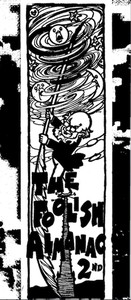
The Foolish Almanak for Anuthur Year: The Furst Cinc the Introdukshun ov the Muk-rake in Magazeen Gardning, and the Speling Reform ov Owr Langwij by Theodor Rosyfelt
Written by Various
Chaptra reads alongside you — AI insights, chapter breakdowns and reader discussions for every book. Join free
About this book
Reading guide
Themes, characters and key ideas in The Foolish Almanak for Anuthur Year: The Furst Cinc the Introdukshun ov the Muk-rake in Magazeen Gardning, and the Speling Reform ov Owr Langwij by Theodor Rosyfelt, written by Chaptra AI.
- about 4 hours
- intermediate
- humorous
- satirical
- witty
“The Foolish Almanak for Anuthur Year” is an early 20th-century satirical almanac that cleverly parodies the traditional format, delivering humorous observations, absurd advice, and whimsical predictions. Written in a distinctive, quirky spelling style, it serves as a comedic commentary on contemporary issues, including the 'muck-rake' journalism and proposed spelling reforms of its era. Through short, witty entries and complementary illustrations, the book invites readers to laugh at the trivialities and oddities of life, presenting a light-hearted yet pointed reflection on societal norms and linguistic conventions. It stands as a unique example of comedic journalism, blending social critique with playful absurdity.
“"The furst cinc the introdukshun ov the Muk-rake in Magazeen Gardning, and the Speling Reform ov Owr Langwij by Theodor Rosyfelt."”
Key themes
- Satire of Conventional Wisdom
- The core theme, the book consistently parodies the earnest advice, predictions, and truisms found in traditional almanacs and self-help literature. It exaggerates common beliefs to expose their inherent flaws or absurdities, encouraging readers to question widely accepted notions.
- Linguistic Playfulness and Spelling Reform
- Directly referenced in the title, the book's unique, phonetic spelling is a central element. It satirizes the early 20th-century movement for spelling reform, often championed by figures like Theodore Roosevelt, by taking its principles to an absurd extreme. This theme highlights the arbitrary nature of language rules and the humor that can be found in their subversion.
- Critique of Journalism and 'Muckraking'
- The title explicitly references 'the Introdukshun ov the Muk-rake in Magazeen Gardning,' pointing to the early 20th-century phenomenon of investigative journalism that exposed corruption and societal ills. The almanac uses satire to comment on the sensationalism, moralizing, or sometimes exaggerated claims of this journalistic style, perhaps suggesting that even serious reporting can become a form of 'gardening' for sensational stories.
Worth discussing
How does the book's unique spelling reform contribute to its humor and satirical message?
Chapter-by-chapter breakdowns, character arcs and the full thematic analysis come with a free account.
Discussions
No one has started one yet
Questions this book opens up
No discussions yet
Be the first to start a discussion about this book!
Sign up to start the discussionReviews
No reviews yet
Be the first to review this book!