
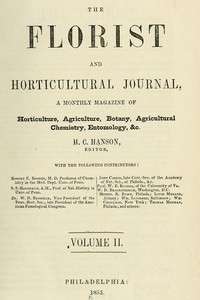
The Florist and Horticultural Journal, Vol. II. No. 7, July, 1853: A Monthly Magazine of Horticulture, Agriculture, Botany, Agricultural Chemistry, Entomology, &c.
Written by Various
Chaptra reads alongside you — AI insights, chapter breakdowns and reader discussions for every book. Join free
About this book
Reading guide
Themes, characters and key ideas in The Florist and Horticultural Journal, Vol. II. No. 7, July, 1853: A Monthly Magazine of Horticulture, Agriculture, Botany, Agricultural Chemistry, Entomology, &c., written by Chaptra AI.
- about 8 hours
- advanced
- Informative
- Scientific
- Historical
"The Florist and Horticultural Journal, Vol. II. No. 7, July, 1853" is a pivotal mid-19th-century scientific publication dedicated to advancing horticultural and botanical knowledge. This particular volume, part of an ongoing series, delves into contemporary plant species, cultivation methodologies, and gardening practices prevalent in 1853. It serves as a vital resource for both enthusiasts and professional practitioners, offering detailed insights into specific plants like the Begonia xanthina and Auricula, alongside broader discussions on agricultural chemistry and entomology. The journal uniquely emphasizes the importance of cultivating native American flora, challenging the sole focus on European trends, and fosters a community of horticulturists through shared tips, correspondence, and passionate exploration of the field.
“"The cultivation of the Begonia xanthina demands careful attention to soil composition and light exposure, a challenge well-rewarded by its vibrant yellow blossoms."”
Key themes
- Advancement of Botanical and Horticultural Knowledge
- This theme explores the relentless pursuit of understanding plant life, improving cultivation methods, and applying scientific principles (like agricultural chemistry) to gardening. The journal showcases new discoveries, detailed plant descriptions, and innovative techniques.
- American Horticultural Identity
- The journal passionately advocates for the appreciation and cultivation of native American plants, signaling a move away from solely replicating European gardening trends. This reflects a growing sense of national identity and pride in indigenous flora.
- Community and Exchange of Knowledge
- The journal serves as a vital platform for horticulturists to share their experiences, discoveries, and debates. The correspondence sections are particularly indicative of a vibrant, interconnected community dedicated to collective learning and mutual support.
Worth discussing
How did 19th-century horticultural journals like this one contribute to the democratization and professionalization of scientific knowledge?
Chapter-by-chapter breakdowns, character arcs and the full thematic analysis come with a free account.
Discussions
No one has started one yet
Questions this book opens up
No discussions yet
Be the first to start a discussion about this book!
Sign up to start the discussionReviews
No reviews yet
Be the first to review this book!