
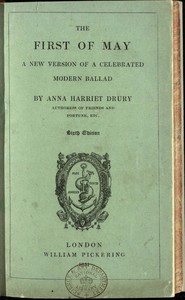
The first of May: a new version of a celebrated modern ballad: sixth edition
Written by Anna H. (Anna Harriet) Drury
Chaptra reads alongside you — AI insights, chapter breakdowns and reader discussions for every book. Join free
About this book
Read it with a club
Small groups reading the same books and talking as they go.


News
- 4 members
- 1,813 discussions
- Active Sep 11
Read The first of May: a new version of a celebrated modern ballad: sixth edition alongside people who are reading it too.
Also here: News Bulletin, Just Joking....
Chaptra Prime — paid clubs, every club feature, and unlimited reading support, for $5 a month or $60 once.
See PrimeReading guide
Themes, characters and key ideas in The first of May: a new version of a celebrated modern ballad: sixth edition, written by Chaptra AI.
- about 2 hours
- intermediate
- humorous
- uplifting
- satirical
Anna H. Drury's "The First of May" is a mid-19th century satirical ballad that humorously chronicles the monumental undertaking of the Great Exhibition of 1851. The poem captures the initial excitement and subsequent anxieties surrounding the event's preparation, particularly focusing on Prince Albert's strenuous efforts to foster international collaboration. Drury skillfully contrasts Albert's worries about public discontent and potential failure with Queen Victoria's unwavering confidence and spirited support. Ultimately, the ballad culminates in a vibrant, celebratory depiction of the Exhibition's opening day, highlighting themes of national pride, unity, and the shared joy of communal achievement, cementing the event's significance in British history.
“"When Albert, with a vision grand, did seek to link each distant land."”
Key themes
- National Pride and Identity
- The poem explores how the Great Exhibition served as a massive display of British industrial, artistic, and technological superiority, fostering a strong sense of national pride. It reflects the Victorian era's confidence in its own progress and its place as a global leader, yet also hints at the underlying need to prove this dominance.
- Collaboration and Unity
- A core theme is the effort to bring together diverse nations and individuals for a common goal. The poem highlights the challenges of achieving this unity amidst varying interests but ultimately celebrates its triumph as essential for grand collective achievements. It underscores the idea that progress is a shared human endeavor.
- Anxiety vs. Optimism in Public Endeavors
- The ballad effectively contrasts the anxieties and worries faced by Prince Albert regarding the potential for public discontent or failure with Queen Victoria's unwavering optimism and faith. This dynamic illustrates the psychological pressures of managing large-scale public events and the importance of morale and positive outlook.
Worth discussing
How does Drury use humor and satire to convey the challenges and triumphs of organizing the Great Exhibition?
Chapter-by-chapter breakdowns, character arcs and the full thematic analysis come with a free account.
Discussions
No one has started one yet
Questions this book opens up
No discussions yet
Be the first to start a discussion about this book!
Sign up to start the discussionReviews
No reviews yet
Be the first to review this book!