
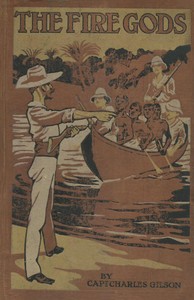
The Fire-Gods: A Tale of the Congo
Written by Charles Gilson
Chaptra reads alongside you — AI insights, chapter breakdowns and reader discussions for every book. Join free
About this book
Read it with a club
Small groups reading the same books and talking as they go.


News
- 1 member
- 1,813 discussions
- Active 2d ago
Read The Fire-Gods: A Tale of the Congo alongside people who are reading it too.
Also here: News Bulletin, Just Joking....
Chaptra Prime — paid clubs, every club feature, and unlimited reading support, for $5 a month or $60 once.
See PrimeReading guide
Themes, characters and key ideas in The Fire-Gods: A Tale of the Congo, written by Chaptra AI.
- about 8 hours
- intermediate
- Adventurous
- Perilous
- Exotic
Captain Charles Gilson's "The Fire-Gods: A Tale of the Congo" is an early 20th-century adventure novel chronicling the perilous expedition of seasoned explorer Edward Harden and his eager nephew, Max, into the heart of the Congo. Their quest, initiated from the hallowed halls of the Explorers' Club, aims to uncover geographical marvels and pursue big game, but quickly veers into the mythical with the mention of cannibal tribes, the fabled "Hidden River," and the fearsome "Fire-Gods." Along their journey, they enlist the aid of the enigmatic survivalist Captain Crouch, whose knowledge of the local tribes proves invaluable. The narrative thus unfolds as a thrilling exploration into the unknown, fraught with danger, cultural encounters, and the promise of unraveling ancient mysteries deep within the "Dark Continent."
“"The heart of Africa holds secrets no map can chart, and dangers no civilized man can truly fathom."”
Key themes
- Exploration and Discovery
- At the core of the novel is the thrilling pursuit of the unknown. The Hardens venture into uncharted territories driven by a desire to map new lands, encounter new species, and uncover geographical marvels. This theme celebrates human curiosity and the drive to push boundaries, reflecting the imperialist era's romanticization of discovery.
- Colonialism and Imperialism
- The novel is set against the backdrop of European colonial expansion in Africa. The narrative implicitly, and at times explicitly, reflects the prevailing attitudes of the era, where Africa is viewed as the "Dark Continent"—a land to be explored, charted, and potentially 'civilized' by European powers. This theme examines the power dynamics and cultural clashes inherent in such expeditions.
- Man vs. Nature / Survival
- The unforgiving environment of the Congo River and its surrounding jungles serves as a formidable antagonist. The explorers constantly battle against dangerous wildlife, treacherous terrain, disease, and the sheer vastness of the wilderness. This theme highlights human resilience, ingenuity, and the primal struggle for survival against overwhelming natural forces.
Worth discussing
How does the novel reflect the popular perception of Africa and exploration during the early 20th century?
Chapter-by-chapter breakdowns, character arcs and the full thematic analysis come with a free account.
Discussions
No one has started one yet
Questions this book opens up
No discussions yet
Be the first to start a discussion about this book!
Sign up to start the discussionReviews
No reviews yet
Be the first to review this book!