
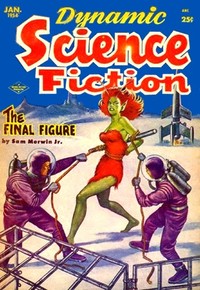
The Final Figure
Written by Sam Merwin
Chaptra reads alongside you — AI insights, chapter breakdowns and reader discussions for every book. Join free
About this book
Reading guide
Themes, characters and key ideas in The Final Figure, written by Chaptra AI.
- about 2 hours
- intermediate
- mysterious
- thought-provoking
- tense
Sam Merwin, Jr.'s "The Final Figure" is a 1950s science fiction novelet centered on Angus MacReedy, a model-maker with an uncanny ability to create miniature replicas of future military weapons. His talent attracts the attention of General Wales, who discovers the alarming accuracy of MacReedy's models, including a secret weapon. The narrative delves into the ethical complexities of leveraging such prophetic abilities for national security against individual freedom and responsibility in a world on the brink. As the story unfolds, it explores the potent intersection of imagination and reality, culminating in a profound twist that questions the nature of foresight itself and the profound cost of innovation.
“"His hands didn't just build, they remembered what was yet to be."”
Key themes
- Foresight and Determinism
- This theme explores whether the future is predetermined and merely observed by MacReedy, or if his 'foresight' actively influences or creates the future. The story questions the nature of causality and free will, particularly through the lens of a talent that seems to bypass conventional time. The chilling twist likely serves to profoundly challenge the reader's understanding of this relationship, suggesting that knowledge of the future might be an agent of its realization.
- Creativity vs. Duty/Control
- This theme examines the tension between an individual's creative impulse and the demands placed upon that talent by external forces, particularly military or governmental authority. MacReedy's artistic gift is transformed into a strategic asset, highlighting the conflict between personal expression and national security. The story questions the ethics of co-opting an individual's unique abilities for collective (and potentially destructive) purposes.
- The Ethics of Knowledge and Power
- The narrative delves into the moral implications of possessing extraordinary knowledge, particularly knowledge of future military capabilities. General Wales grapples with the ethical dilemmas of how to utilize MacReedy's gift responsibly, balancing the potential for national advantage with the dangers of such power falling into the wrong hands or being wielded without sufficient moral oversight. It questions the wisdom of seeking absolute foresight and the potential corruption that comes with it.
Worth discussing
To what extent does Angus MacReedy's gift represent true foresight versus a form of subconscious creation?
Chapter-by-chapter breakdowns, character arcs and the full thematic analysis come with a free account.
Discussions
No one has started one yet
Questions this book opens up
No discussions yet
Be the first to start a discussion about this book!
Sign up to start the discussionReviews
No reviews yet
Be the first to review this book!