
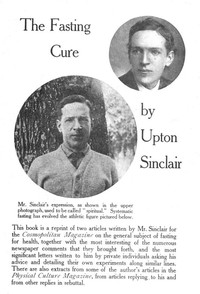
The Fasting Cure
Written by Upton Sinclair
Chaptra reads alongside you — AI insights, chapter breakdowns and reader discussions for every book. Join free
About this book
Reading guide
Themes, characters and key ideas in The Fasting Cure, written by Chaptra AI.
- about 8 hours
- intermediate
- Informative
- Challenging
- Empowering
Upton Sinclair's "The Fasting Cure" is a pioneering early 20th-century health treatise advocating for therapeutic fasting as a path to optimal health. Drawing heavily on his personal battles with chronic illness and subsequent recovery through prolonged fasts, Sinclair presents a compelling argument against conventional medical practices of his era. The book details his experimental journey, observations of others, and the perceived transformative benefits of abstinence from food, positioning fasting not as starvation but as a natural physiological rest that enables the body to heal itself. It serves as both a personal testament and a challenge to established medical wisdom, urging readers to reconsider their approach to health and disease.
“The body, given a chance, knows how to heal itself.”
Key themes
- The Healing Power of Nature and Fasting
- At the core of the book is the belief that the human body possesses an inherent, powerful capacity for self-healing and detoxification. Fasting is presented as the ultimate natural method to activate this capacity, allowing the body to rest from digestion and allocate energy to repair and cleanse itself. It's framed as a return to natural principles, away from the excesses of modern living.
- Critique of Conventional Medicine
- Sinclair vehemently challenges the efficacy and philosophy of early 20th-century medical practices, arguing that they often treat symptoms rather than root causes, relying on drugs and surgeries that ignore the body's natural healing abilities. He portrays the medical establishment as conservative, profit-driven, and resistant to innovative, natural approaches.
- Personal Responsibility and Empowerment
- Sinclair empowers readers by asserting that individuals have the primary responsibility and agency in managing their own health. He encourages self-experimentation, critical thinking, and a departure from blind reliance on external authorities (like doctors). This theme is about taking control of one's body and making informed, often unconventional, choices for well-being.
Worth discussing
How does Sinclair's critique of early 20th-century medicine resonate with or differ from contemporary critiques of healthcare systems?
Chapter-by-chapter breakdowns, character arcs and the full thematic analysis come with a free account.
Discussions
No one has started one yet
Questions this book opens up
No discussions yet
Be the first to start a discussion about this book!
Sign up to start the discussionReviews
No reviews yet
Be the first to review this book!