
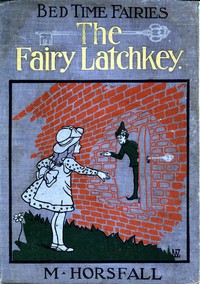
The Fairy Latchkey
Written by Magdalene Horsfall
Chaptra reads alongside you — AI insights, chapter breakdowns and reader discussions for every book. Join free
About this book
Reading guide
Themes, characters and key ideas in The Fairy Latchkey, written by Chaptra AI.
- about 8 hours
- intermediate
- uplifting
- whimsical
- imaginative
Magdalene Horsfall's "The Fairy Latchkey" introduces Philomène Isolde, an imaginative young girl living an ordinary suburban life but yearning for extraordinary adventures and magic. The novel establishes her deep connection to fairy tales and folklore, which intertwine with her daily experiences and relationships with her father and godmother. Her pets and a burgeoning link to the mystical world further ground her fantastical inclinations. The narrative quickly brings her into contact with Sweet William, a fairy who reveals the potential of a newfound latchkey to unlock an enchanting realm, setting the stage for Philomène's journey into a whimsical world where imagination and reality beautifully converge.
“Actual quotes are not available from the provided summary. However, anticipated quotes would likely revolve around Philomène's longing for magic, descriptions of the fairy world, or wisdom shared by Sweet William or Isolde about the power of imagination and belief.”
Key themes
- Imagination vs. Reality
- This is the central theme, exploring the interplay between Philomène's rich inner world of fantasy and the perceived ordinariness of her suburban life. The novel suggests that the line between imagination and reality is permeable, and that belief can unlock hidden dimensions of experience. It champions the child's perspective where stories and dreams hold tangible power.
- The Power of Belief and Wonder
- The novel highlights how Philomène's unwavering belief in magic and her capacity for wonder are not childish delusions but rather the very faculties that enable her to perceive and access the fairy world. It argues that openness to enchantment is key to experiencing a richer, more vibrant existence.
- Coming-of-Age and Self-Discovery
- Philomène's journey into the fairy world is a metaphorical representation of her personal growth and self-discovery. As she navigates new realms and encounters magical beings, she is likely to develop courage, independence, and a deeper understanding of her own identity and capabilities, moving beyond her initial sense of feeling mundane.
Worth discussing
How does Philomène's imagination shape her perception of her ordinary life, and what role does it play in unlocking the extraordinary?
Chapter-by-chapter breakdowns, character arcs and the full thematic analysis come with a free account.
Discussions
No one has started one yet
Questions this book opens up
No discussions yet
Be the first to start a discussion about this book!
Sign up to start the discussionReviews
No reviews yet
Be the first to review this book!