
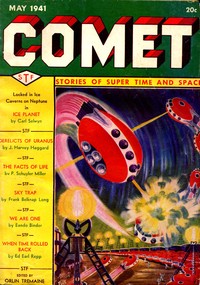
The Facts of Life
Written by P. Schuyler (Peter Schuyler) Miller
Chaptra reads alongside you — AI insights, chapter breakdowns and reader discussions for every book. Join free
About this book
Reading guide
Themes, characters and key ideas in The Facts of Life, written by Chaptra AI.
- about 8 hours
- intermediate
- mysterious
- whimsical
- melancholy
P. Schuyler Miller's mid-20th century science fiction story, "The Facts of Life," explores the profound and unusual bond between humans and botanical life through the eccentric Professor Melchizedek Hobbs and his extraordinary Zulu rose. The narrative follows James Abercrombie as he reconnects with his former teacher, uncovering the professor's deep obsession with a plant that exhibits animalistic traits and forms a symbiotic relationship with its caretaker. This whimsical premise delves into themes of unconventional companionship, scientific dedication, and societal perception. The story culminates in the tragic extinction of the Zulu rose in the Western Hemisphere, leaving a poignant commentary on loneliness, loss, and the intricate connections that can exist between humanity and the natural world.
“"The Zulu rose, James, is not merely a plant; it is a conversation, a silent symphony of life that understands more than we ever give it credit for."”
Key themes
- Human-Nature Connection and Interspecies Companionship
- This is the core theme, exploring the profound and unusual bond that develops between Professor Hobbs and the Zulu rose. The story challenges conventional ideas of companionship, suggesting that deep, meaningful relationships can form across species, even with botanical life. It delves into the emotional reciprocity between humans and nature, highlighting the capacity for empathy and connection beyond the human realm.
- Unconventionality vs. Societal Norms
- The story examines the tension between Professor Hobbs's eccentric, unconventional pursuits and the broader societal expectations or understanding. Hobbs's obsession with the Zulu rose likely isolates him from mainstream scientific and social circles, presenting a commentary on how society perceives and often marginalizes those who deviate from the norm, particularly in the pursuit of knowledge or unique forms of connection.
- Loss, Loneliness, and the Fragility of Life
- Culminating in the extinction of the Zulu rose, this theme explores the profound emotional impact of loss, particularly when that loss involves a unique and cherished form of life. It delves into the resulting loneliness and the void left behind, highlighting the fragility of unique ecosystems and the irreversible consequences of their disappearance. The story uses the botanical extinction as a powerful metaphor for broader environmental and personal losses.
Worth discussing
How does Professor Hobbs challenge conventional notions of scientific pursuit and companionship?
Chapter-by-chapter breakdowns, character arcs and the full thematic analysis come with a free account.
Discussions
No one has started one yet
Questions this book opens up
No discussions yet
Be the first to start a discussion about this book!
Sign up to start the discussionReviews
No reviews yet
Be the first to review this book!