
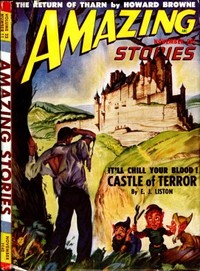
The Eye of Wilbur Mook
Written by H. B. Hickey
Chaptra reads alongside you — AI insights, chapter breakdowns and reader discussions for every book. Join free
About this book
Reading guide
Themes, characters and key ideas in The Eye of Wilbur Mook, written by Chaptra AI.
- about 8 hours
- intermediate
- humorous
- uplifting
- whimsical
H. B. Hickey's "The Eye of Wilbur Mook" is a charming mid-20th-century whimsical fantasy that chronicles the extraordinary transformation of Wilbur Mook, a timid and insecure man oppressed by a tyrannical boss. His life takes an unexpected turn when he encounters the enigmatic A. J. Merlin, who transports him to the legendary court of King Arthur. There, Wilbur is thrust into a quest involving Excalibur, forcing him to confront his deep-seated fears and discover an inner bravery he never knew he possessed. Through humorous and dangerous adventures, alongside navigating personal feelings for his coworker Miss Burnett, Wilbur ultimately learns that true courage is not the absence of fear, but the triumph over it, profoundly changing his perception of himself and his place in the world.
“"Courage, young Mook, is not the absence of fear, but the triumph over it. And you, my friend, have a great triumph ahead."”
Key themes
- Courage and Cowardice
- This is the central theme, explored through Wilbur Mook's journey from extreme timidity to genuine bravery. The book posits that courage is not the absence of fear, but the decision to act despite it, and that it can be cultivated through experience and self-belief. It contrasts Wilbur's initial cowardice with the inherent bravery required in the Arthurian setting.
- Self-Discovery and Transformation
- Wilbur's entire narrative arc is a journey of self-discovery, where he uncovers hidden strengths and capabilities. His fantastical adventure serves as a catalyst for profound personal transformation, allowing him to redefine his identity and self-worth. He learns that his potential was always within him, merely dormant.
- The Nature of Heroism
- The book challenges conventional notions of heroism by presenting a timid, ordinary man as its protagonist. It suggests that heroism isn't solely about grand, physical feats or noble lineage, but also about inner strength, moral courage, and the willingness to face personal fears. Wilbur's 'heroism' is often quiet and reluctant, yet profoundly impactful.
Worth discussing
How does Wilbur's transformation challenge traditional notions of heroism? Is he a hero by the end?
Chapter-by-chapter breakdowns, character arcs and the full thematic analysis come with a free account.
Discussions
No one has started one yet
Questions this book opens up
No discussions yet
Be the first to start a discussion about this book!
Sign up to start the discussionReviews
No reviews yet
Be the first to review this book!