
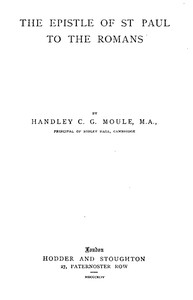
The Expositor's Bible: The Epistle of St Paul to the Romans
Written by H. C. G. (Handley Carr Glyn) Moule
Chaptra reads alongside you — AI insights, chapter breakdowns and reader discussions for every book. Join free
About this book
Reading guide
Themes, characters and key ideas in The Expositor's Bible: The Epistle of St Paul to the Romans, written by Chaptra AI.
- about 30 hours
- advanced
- Profound
- Analytical
- Reverent
H. C. G. Moule's "The Expositor's Bible: The Epistle of St Paul to the Romans" is a late 19th-century theological commentary offering a meticulous exposition of Paul's Epistle to the Romans. Moule systematically unpacks the letter's profound spiritual insights, exploring central themes such as justification by faith, divine grace, and the human condition in light of God's righteousness. The work meticulously contextualizes Paul's writing from Corinth, addressing the diverse Christian community in Rome under the shadow of historical and political events like Nero's reign. Through detailed textual analysis and theological reflection, Moule guides readers to a deeper understanding of the foundational doctrines and practical implications embedded in this pivotal biblical text.
“The Epistle to the Romans stands as the majestic cathedral of Christian doctrine, and Paul, its architect, reveals the very heart of God's redemptive plan.”
Key themes
- Justification by Faith
- This is the central theological pillar of Romans, and Moule dedicates significant attention to its exposition. It refers to the doctrine that humanity is declared righteous by God not through adherence to the Law or good works, but solely through faith in Jesus Christ's atoning sacrifice. Moule explores how this concept liberates believers from the burden of self-righteousness and establishes a new relationship with God based on grace.
- Divine Grace vs. Human Sin
- Moule meticulously unpacks Paul's comprehensive argument for the universal fallenness of humanity (both Gentile and Jew) and their inability to achieve righteousness through their own efforts. This pervasive human sinfulness is then contrasted with God's sovereign, unmerited favor and love—His grace—which provides the sole means of salvation. The tension between these two realities drives much of Paul's argument and Moule's analysis.
- The Righteousness of God
- Moule emphasizes that 'the righteousness of God' is multifaceted, referring both to God's inherent attribute of justice and holiness, and to the righteousness that God freely imputes to believers through faith in Christ. This theme underpins the entire Epistle, explaining how God, being perfectly just, can also be the justifier of those who believe.
Worth discussing
How does Moule's 19th-century theological perspective influence his interpretation of Paul's arguments on justification by faith, and how might it differ from contemporary readings?
Chapter-by-chapter breakdowns, character arcs and the full thematic analysis come with a free account.
Discussions
No one has started one yet
Questions this book opens up
No discussions yet
Be the first to start a discussion about this book!
Sign up to start the discussionReviews
No reviews yet
Be the first to review this book!