
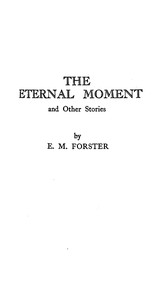
The eternal moment, and other stories
Written by E. M. (Edward Morgan) Forster
Chaptra reads alongside you — AI insights, chapter breakdowns and reader discussions for every book. Join free
About this book
Reading guide
Themes, characters and key ideas in The eternal moment, and other stories, written by Chaptra AI.
- about 8 hours
- intermediate
- dystopian
- prescient
- cautionary
E. M. Forster's "The Eternal Moment, and Other Stories" is a collection of short fiction, prominently featuring the prescient dystopian novella "The Machine Stops." This seminal work imagines a future where humanity lives in isolated, underground cells, entirely dependent on an all-encompassing Machine for every need, fostering intellectual and social stagnation. The narrative follows Vashti, who embraces this technologically mediated existence, and her son, Kuno, who rebels, seeking direct experience and connection with the natural world. Through their conflict, the story critiques unchecked technological advancement, the erosion of human connection, and the vital importance of direct experience over mediated reality, offering a profound commentary on humanity's relationship with its creations.
“"The Machine stops."”
Key themes
- Dangers of Over-reliance on Technology
- The central theme, explored through a society where humanity has outsourced all needs to an omnipotent 'Machine.' This reliance leads to physical weakness, intellectual stagnation, and an inability to adapt or survive when technology fails, serving as a stark warning about unchecked technological dependence.
- Loss of Human Connection and Social Isolation
- Forster depicts a society where genuine human interaction is replaced by dispassionate, mediated communication. Individuals live in isolated cells, and direct contact is considered awkward or even undesirable, leading to a profound sense of loneliness and emotional detachment.
- Dehumanization and the Erosion of Humanity
- Through its comprehensive control, the Machine gradually strips humanity of its physical capabilities, emotional depth, and capacity for independent thought. People become indistinguishable, weak, and ultimately lose their essence as human beings.
Worth discussing
How does Forster's vision of a technologically dependent society in "The Machine Stops" compare to our current world? What aspects did he predict accurately?
Chapter-by-chapter breakdowns, character arcs and the full thematic analysis come with a free account.
Discussions
No one has started one yet
Questions this book opens up
No discussions yet
Be the first to start a discussion about this book!
Sign up to start the discussionReviews
No reviews yet
Be the first to review this book!