
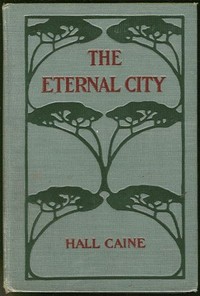
The Eternal City
Written by Hall Caine
Chaptra reads alongside you — AI insights, chapter breakdowns and reader discussions for every book. Join free
About this book
Reading guide
Themes, characters and key ideas in The Eternal City, written by Chaptra AI.
- about 15 hours
- advanced
- dramatic
- socially conscious
- romantic
Hall Caine's "The Eternal City" is an early 20th-century novel set against the turbulent backdrop of Rome, exploring profound themes of love, sacrifice, and social justice. The narrative opens with the poignant struggles of a young, impoverished boy, David Leone, in London, before rapidly shifting twenty years later to the bustling Papal Jubilee in Rome. Here, the central figure, David Rossi, emerges as an influential anarchist politician committed to radical social reform. The story intricately weaves personal dramas with large-scale political upheaval, examining the plight of the working class and the individual's role in challenging systemic injustice, culminating in a powerful commentary on societal transformation.
“Rome demands not merely reverence, but revolution for the forgotten.”
Key themes
- Social Justice
- This is the central theme, explored through David Rossi's anarchist ideals and his fight against poverty and inequality in Rome. The novel vividly portrays the suffering of the working class and critiques the established powers (Church and State) for their role in perpetuating these injustices. It questions the methods of achieving justice, from peaceful protest to more radical action.
- Love and Sacrifice
- The novel explores how personal love intersects with political ideals and the sacrifices individuals are willing to make for both. Characters are often torn between their romantic relationships and their commitment to a greater cause, highlighting the profound personal cost of political engagement. Sacrifice is presented as a multifaceted concept, encompassing personal comfort, safety, and even life itself.
- Political Reform vs. Revolution
- The novel deeply examines the tension between gradual political reform and radical revolution as means to achieve social change. David Rossi, as an 'anarchist politician,' embodies a complex position, suggesting a desire for fundamental systemic change, but perhaps through organized, albeit radical, political means rather than pure chaos. The narrative explores the efficacy, morality, and consequences of both approaches.
Worth discussing
How does Caine use the city of Rome as a character and symbol in the novel?
Chapter-by-chapter breakdowns, character arcs and the full thematic analysis come with a free account.
Discussions
No one has started one yet
Questions this book opens up
No discussions yet
Be the first to start a discussion about this book!
Sign up to start the discussionReviews
No reviews yet
Be the first to review this book!