
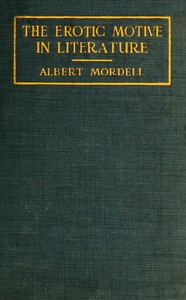
The Erotic Motive in Literature
Written by Albert Mordell
Chaptra reads alongside you — AI insights, chapter breakdowns and reader discussions for every book. Join free
About this book
Reading guide
Themes, characters and key ideas in The Erotic Motive in Literature, written by Chaptra AI.
- about 12 hours
- advanced
- analytical
- theoretical
- challenging
Albert Mordell's "The Erotic Motive in Literature" is a seminal work of early 20th-century psychoanalytic literary criticism, asserting that literature fundamentally springs from the author's unconscious erotic motives. Mordell posits that personal experiences, hidden emotions, and traumas, often sexual in nature, deeply influence an author's creative output across various genres. He advocates for a psychoanalytic approach to literary analysis, treating texts as symbolic reflections akin to dreams, which can reveal underlying psychological conflicts and desires. The book's central ambition is to demonstrate how these often-unacknowledged erotic currents drive human creativity and shape narratives, thereby laying a foundational stone for the application of Freudian theories to literary studies.
“Literature serves as a personal reflection of the author, revealing hidden emotions and traumas that shape their narratives.”
Key themes
- The Unconscious in Literature
- This is the foundational theme of Mordell's work. He argues that literature is not merely a conscious creation but is deeply shaped by the author's unconscious mind. Repressed desires, hidden traumas, and unacknowledged emotions find their way into narratives, characterizations, and symbolism, often without the author's explicit awareness. The book aims to make these unconscious influences visible through critical analysis.
- Erotic Motives as Creative Drive
- Central to Mordell's thesis is the idea that 'erotic motives' – broadly interpreted to include not just sexual desire but also life-affirming drives, desires for connection, power, or even self-preservation – are the fundamental wellspring of human creativity. He suggests that these drives, when repressed or sublimated, are transformed into artistic expression, providing a powerful impetus for authors to create narratives that explore these deeply human urges, albeit often in disguised forms.
- Psychoanalysis as a Critical Method
- Mordell's book is not just an analysis of literature but also a manifesto for a new way of reading: psychoanalytic literary criticism. He advocates for a methodological shift, urging critics to move beyond surface-level observations of style or plot to undertake a 'deeper examination of texts' to uncover the author's psyche. This theme emphasizes the potential of psychoanalysis as a powerful tool for unlocking the hidden dimensions of literary creation and understanding the human mind through its artistic expressions.
Worth discussing
To what extent is literature truly a reflection of an author's unconscious desires, as Mordell suggests?
Chapter-by-chapter breakdowns, character arcs and the full thematic analysis come with a free account.
Discussions
No one has started one yet
Questions this book opens up
No discussions yet
Be the first to start a discussion about this book!
Sign up to start the discussionReviews
No reviews yet
Be the first to review this book!