
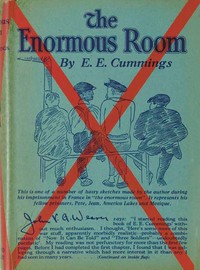
The Enormous Room
Written by E. E. (Edward Estlin) Cummings
Chaptra reads alongside you — AI insights, chapter breakdowns and reader discussions for every book. Join free
About this book
Reading guide
Themes, characters and key ideas in The Enormous Room, written by Chaptra AI.
- about 10 hours
- advanced
- satirical
- introspective
- absurdist
E. E. Cummings' "The Enormous Room" is a semi-autobiographical novel set during World War I, chronicling the experiences of a young American, Edward Estlin Cummings, while serving as an ambulance driver in France. Following a series of bureaucratic misunderstandings and his friendship with another American deemed suspicious, Cummings is arrested and eventually interned in a French detention camp, known as 'The Enormous Room,' at La Ferté-Macé. The narrative vividly details the absurdities of wartime bureaucracy, the dehumanizing effects of imprisonment, and the profound resilience of the human spirit. Through sharp observation and innovative language, Cummings explores themes of individuality versus conformity, the nature of freedom, and the enduring power of human connection amidst adversity, ultimately presenting a powerful critique of societal systems that suppress personal liberty and truth.
“A comfortable hell is a hell nevertheless.”
Key themes
- Individuality vs. Conformity
- This is the central conflict of the novel. Cummings relentlessly champions the unique, the eccentric, and the non-conformist individual against the homogenizing pressures of bureaucratic systems, military discipline, and societal expectations. The 'Delectable Mountains' are celebrated precisely for their refusal or inability to fit into prescribed molds, while the authorities represent the dull, oppressive force of conformity.
- The Absurdity of War and Bureaucracy
- Cummings critiques the irrationality, inefficiency, and dehumanizing nature of wartime administration. His arrest and imprisonment are based on flimsy pretenses and illogical procedures, highlighting how systems designed for order can produce utter chaos and injustice. The novel portrays war not as glorious combat, but as a series of nonsensical rules and arbitrary punishments.
- The Nature of Freedom and Imprisonment
- Cummings explores the paradox that true freedom is an internal state, independent of physical confinement. While physically imprisoned, the protagonist finds a deeper understanding of human spirit and individuality among his fellow inmates, suggesting that spiritual and intellectual liberty can thrive even in the most oppressive physical environments. Conversely, those in authority, though physically free, are often mentally enslaved by their roles and conventional thinking.
Worth discussing
How does Cummings use language (syntax, punctuation, capitalization) to reflect the protagonist's state of mind and critique societal norms?
Chapter-by-chapter breakdowns, character arcs and the full thematic analysis come with a free account.
Discussions
No one has started one yet
Questions this book opens up
No discussions yet
Be the first to start a discussion about this book!
Sign up to start the discussionReviews
No reviews yet
Be the first to review this book!