
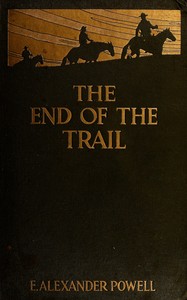
The end of the trail : $b The far west from New Mexico to British Columbia
Written by E. Alexander (Edward Alexander) Powell
Chaptra reads alongside you — AI insights, chapter breakdowns and reader discussions for every book. Join free
About this book
Reading guide
Themes, characters and key ideas in The end of the trail : $b The far west from New Mexico to British Columbia, written by Chaptra AI.
- about 9 hours
- intermediate
- Exploratory
- Historical
- Observational
E. Alexander Powell's "The end of the trail" is an early 20th-century historical account and travelogue that chronicles the transformation of the American West, from New Mexico north to British Columbia. The book explores the idea that the American journey has reached its geographical limit at the Pacific, contrasting romanticized images of the 'Wild West' with the changing realities of frontier life. Powell, traveling often by motor car, provides firsthand observations of landscapes reinvented by modern development and irrigation, alongside the enduring presence of diverse communities including modern pioneers, Hispanic, and Native peoples. It serves as an engaging blend of travel memoir, local color writing, and keen social observation, documenting a pivotal period in the history of North America's western edge.
“The American journey has reached its final geographical limit at the Pacific, yet the spirit of the frontier endures in myriad forms.”
Key themes
- The End of the Frontier
- This is the central thematic pillar of the book, directly referenced in the title. It explores the idea that America's geographical expansion has reached its limit at the Pacific, prompting a reflection on what this means for national identity, ongoing development, and the legacy of westward migration. It contrasts the historical concept of an open, untamed frontier with the reality of a settled, developing West.
- Transformation vs. Persistence
- This theme examines the dynamic interplay between rapid modernization and the enduring elements of the old West. Powell observes how new technologies, industries, and populations transform landscapes and societies, while simultaneously noting the resilience of traditional cultures, natural features, and certain 'frontier' mentalities that persist despite change.
- Cultural Encounter and Diversity
- Powell's journey highlights the rich tapestry of cultures inhabiting the Far West. He documents interactions and coexistence (or tensions) between 'modern pioneers,' Hispanic communities, Native communities, and the remnants of cowboy and prospector cultures. This theme explores how different groups shape and are shaped by the evolving western landscape.
Worth discussing
How does Powell define 'The end of the trail,' and what does this concept signify for the American identity?
Chapter-by-chapter breakdowns, character arcs and the full thematic analysis come with a free account.
Discussions
No one has started one yet
Questions this book opens up
No discussions yet
Be the first to start a discussion about this book!
Sign up to start the discussionReviews
No reviews yet
Be the first to review this book!