
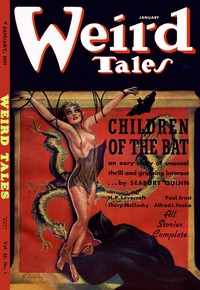
The eater of souls
Written by Henry Kuttner
Chaptra reads alongside you — AI insights, chapter breakdowns and reader discussions for every book. Join free
About this book
Reading guide
Themes, characters and key ideas in The eater of souls, written by Chaptra AI.
- about 8 hours
- intermediate
- dark
- horrifying
- tragic
Henry Kuttner's "The Eater of Souls" is a cosmic horror short story set on the distant world of Bel Yarnak, where the ruler, Sindara, confronts an existential threat. An ominous entity, the Eater of Souls, preys on the inhabitants, luring their very essence into an abyss. Defying conventional wisdom, Sindara relies on divine devotion to his god, Vorvadoss, embarking on a perilous journey to face this unfathomable horror. The narrative culminates in a harrowing battle at the Gray Gulf, where Sindara undergoes a horrific metamorphosis, merging with the very entity he sought to destroy. This tragic act, driven by a desperate bid to break a cycle of despair, results in his ultimate descent into darkness and the profound loss of his former identity.
“The shadow of the Eater fell not upon their land alone, but upon the very essence of their being.”
Key themes
- Cosmic Horror and Existential Dread
- The story is a prime example of cosmic horror, where humanity is insignificant against vast, malevolent, or indifferent forces of the universe. The Eater of Souls embodies this, being an entity beyond human comprehension and control, instilling a deep sense of dread and questioning human agency in the face of such power. It emphasizes the terror of the unknown and the fragility of existence.
- Sacrifice and Loss of Identity
- A central theme is the idea of ultimate sacrifice, where the hero must give up not just his life, but his very self, to confront evil. Sindara's metamorphosis and merging with the Eater of Souls is a horrific act of self-annihilation for a greater, albeit despairing, purpose. This leads to a profound loss of identity, as his former self is irrevocably altered.
- Faith vs. Practicality/Reason
- The story presents a clear dichotomy between Sindara's unwavering faith in his god, Vorvadoss, and the more pragmatic, perhaps rational, counsel offered by the necromancers and hydromancers. Sindara's choice to rely solely on faith, even in the face of cosmic horror, highlights the power and potential limitations of spiritual belief when confronting forces beyond conventional understanding.
Worth discussing
How does Kuttner establish the sense of cosmic horror and existential dread in the story?
Chapter-by-chapter breakdowns, character arcs and the full thematic analysis come with a free account.
Discussions
No one has started one yet
Questions this book opens up
No discussions yet
Be the first to start a discussion about this book!
Sign up to start the discussionReviews
No reviews yet
Be the first to review this book!