
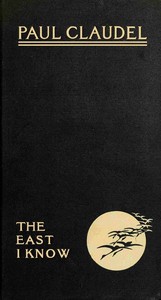
The East I know
Written by Paul Claudel
Chaptra reads alongside you — AI insights, chapter breakdowns and reader discussions for every book. Join free
About this book
Reading guide
Themes, characters and key ideas in The East I know, written by Chaptra AI.
- about 10 hours
- advanced
- Reflective
- Spiritual
- Evocative
Paul Claudel's "The East I Know" is a profound collection of poetic reflections and observations from the early 20th century, chronicling his immersive experiences across various Eastern landscapes and cultures. The work serves as a spiritual and aesthetic journey, where Claudel, through a series of vivid vignettes, explores the natural beauty, religious practices, and daily lives of the people he encounters, particularly starting with Ceylon. His lyrical prose delves into the symbolic significance of elements like the cocoa palm, weaving a rich, sensory tapestry that captures a world of both chaos and harmony. Ultimately, the book is a testament to Claudel's deep fascination with Eastern spirituality and aesthetics, inviting readers into a contemplative exploration of cultural encounter and the sublime in nature.
“The cocoa palm is a song of victory, a plume of grace, a fountain of life ascending from the very heart of the earth.”
Key themes
- Spirituality and the Sacred
- Central to Claudel's exploration, this theme delves into how spirituality is woven into the everyday life, nature, and cultural practices of the East. He perceives a palpable sense of the sacred in the mundane, connecting landscapes, customs, and human existence to a deeper, divine order, often interpreted through his own Catholic framework.
- Nature's Beauty and Power
- The book is deeply immersed in the natural world of the East, particularly its lush and vibrant landscapes. Claudel portrays nature not merely as a backdrop but as an active, living entity, a source of profound beauty, spiritual revelation, and symbolic meaning. He uses detailed, sensory descriptions to convey its overwhelming presence and vitality.
- Aesthetics and Sensory Experience
- Claudel's work is a masterclass in sensory writing, emphasizing the aesthetic experience of the East. He meticulously records sights, sounds, smells, and textures, creating a vibrant, immersive tapestry for the reader. This focus on sensation is not merely descriptive but serves as a pathway to deeper spiritual and philosophical insights, where beauty itself is a form of truth.
Worth discussing
How does Claudel's Catholic faith inform his observations and interpretations of Eastern spirituality and culture?
Chapter-by-chapter breakdowns, character arcs and the full thematic analysis come with a free account.
Discussions
No one has started one yet
Questions this book opens up
No discussions yet
Be the first to start a discussion about this book!
Sign up to start the discussionReviews
No reviews yet
Be the first to review this book!