
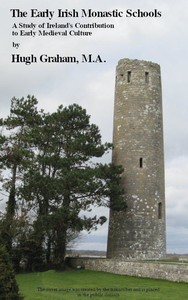
The Early Irish Monastic Schools: A study of Ireland's contribution to early medieval culture
Written by Hugh Graham
Chaptra reads alongside you — AI insights, chapter breakdowns and reader discussions for every book. Join free
About this book
Reading guide
Themes, characters and key ideas in The Early Irish Monastic Schools: A study of Ireland's contribution to early medieval culture, written by Chaptra AI.
- about 8 hours
- advanced
- informative
- scholarly
- historical
Hugh Graham's "The Early Irish Monastic Schools" offers a pioneering early 20th-century historical examination of the significant role played by Irish monastic institutions before 900 A.D. The book meticulously details how these schools served as crucial centers for learning, preserving and advancing knowledge during a period of widespread decline in post-Roman Europe. Graham emphasizes the unique cultural synthesis within these schools, where indigenous Irish traditions merged with Christian doctrine and classical Graeco-Roman scholarship. By exploring the challenges of historical evidence for pre-Christian Ireland, the study sets a comprehensive context for understanding Ireland's profound and often underestimated contributions to early medieval education and culture across Western Europe.
“Ireland, standing on the periphery of Europe, became a crucible where the intellectual fires of antiquity were kept alight amidst the encroaching shadows.”
Key themes
- Preservation and Dissemination of Learning
- This is a core theme, emphasizing how Irish monastic schools acted as vital repositories for classical and Christian knowledge during a period when much of Europe experienced intellectual decline. Graham shows how they meticulously copied texts, established libraries, and then actively disseminated this learning through missionary and scholarly endeavors on the continent.
- Cultural Synthesis and Hybridity
- Graham consistently highlights the unique blend of native Irish culture (oral traditions, laws, literary forms), Christian doctrine, and Graeco-Roman learning that defined these schools. This synthesis created a distinct form of scholarship that was neither purely classical nor purely Christian, but a vibrant new cultural expression.
- Irish Contribution to European Culture
- A central thesis of the book is to underscore the profound and often overlooked contributions of Ireland to the intellectual and cultural revival of early medieval Europe. Graham argues that Ireland was not merely a recipient of culture but an active generator and disseminator, playing a critical role in shaping the continent's intellectual future.
Worth discussing
How does Graham's early 20th-century perspective influence his interpretation of Irish history and cultural contributions?
Chapter-by-chapter breakdowns, character arcs and the full thematic analysis come with a free account.
Discussions
No one has started one yet
Questions this book opens up
No discussions yet
Be the first to start a discussion about this book!
Sign up to start the discussionReviews
No reviews yet
Be the first to review this book!