
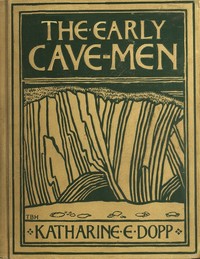
The Early Cave-Men
Written by Katharine Elizabeth Dopp
Chaptra reads alongside you — AI insights, chapter breakdowns and reader discussions for every book. Join free
About this book
Read it with a club
Small groups reading the same books and talking as they go.


News
- 4 members
- 1,813 discussions
- Active Sep 11
Read The Early Cave-Men alongside people who are reading it too.
Also here: News Bulletin, Just Joking....
Chaptra Prime — paid clubs, every club feature, and unlimited reading support, for $5 a month or $60 once.
See PrimeReading guide
Themes, characters and key ideas in The Early Cave-Men, written by Chaptra AI.
- about 8 hours
- beginner
- educational
- prehistoric
- survivalist
“The Early Cave-Men” by Katharine Elizabeth Dopp is an early 20th-century educational text for elementary students, chronicling the transition and adaptation of early human societies. It vividly portrays the daily struggles of prehistoric cave-men, particularly a group known as the Fire Clan, as they evolve from tree-dwellers to cave inhabitants seeking shelter from harsh environments and dangerous predators like the Sabre-tooth. The narrative emphasizes their development of survival techniques, including the use of tools and fire, and their resourceful strategies for overcoming challenges. By engaging readers with the characters' plight, the book lays foundational educational themes about human ingenuity, community, and the evolution of early civilization.
“The cold winds blew, and the trees offered little shelter. A new home was needed, one carved from the very earth.”
Key themes
- Survival and Adaptation
- This theme explores the fundamental struggle of early humans against a harsh prehistoric environment. It highlights their inherent drive to survive in the face of extreme cold, dangerous wildlife, and the constant need for food and shelter. The narrative demonstrates how early humans were forced to continually adapt their behaviors and living conditions to ensure their continued existence and progression as a species.
- Innovation and Resourcefulness
- This theme showcases the remarkable ingenuity of early humans in developing new technologies and strategies to overcome their environmental challenges. It emphasizes their capacity for problem-solving, from learning to utilize rudimentary tools for various tasks to mastering the control of fire. These innovations were crucial steps in their societal and technological evolution, marking a significant departure from purely instinctual survival.
- Community and Cooperation
- The book implicitly emphasizes the critical importance of collective action, mutual support, and social cohesion among early humans. The focus on the 'Fire Clan' suggests that survival was not an individual endeavor but a communal one, where shared responsibilities, collective vigilance, and combined efforts were essential for the group's well-being, security, and success against overwhelming environmental threats.
Worth discussing
What challenges did early humans face that we no longer worry about in our daily lives today?
Chapter-by-chapter breakdowns, character arcs and the full thematic analysis come with a free account.
Discussions
No one has started one yet
Questions this book opens up
No discussions yet
Be the first to start a discussion about this book!
Sign up to start the discussionReviews
No reviews yet
Be the first to review this book!