
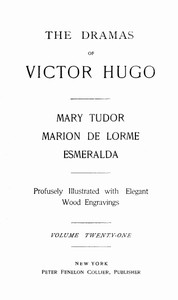
The Dramas of Victor Hugo: Mary Tudor, Marion de Lorme, Esmeralda
Written by Victor Hugo
Chaptra reads alongside you — AI insights, chapter breakdowns and reader discussions for every book. Join free
About this book
Reading guide
Themes, characters and key ideas in The Dramas of Victor Hugo: Mary Tudor, Marion de Lorme, Esmeralda, written by Chaptra AI.
- about 12 hours
- advanced
- dark
- dramatic
- tragic
This collection, "The Dramas of Victor Hugo: Mary Tudor, Marion de Lorme, Esmeralda," showcases Victor Hugo's mastery of historical Romantic drama, delving into the turbulent intersections of love, power, and betrayal. Set against politically charged historical backdrops, each play explores the moral complexities faced by characters caught in grand societal and personal conflicts. "Mary Tudor" exemplifies this, presenting Queen Mary's infatuation with Fabiano Fabiani amidst court intrigue, noble discontent, and a burgeoning love triangle involving Gilbert and Jane. Hugo masterfully weaves personal stakes with broader historical narratives, highlighting the tragic consequences of ambition, deception, and unchecked authority. The collection as a whole stands as a testament to Hugo's ability to imbue historical figures and events with profound human drama and social commentary.
“"Power is a poisoned chalice; drink too deeply, and you shall find death in its dregs, not glory."”
Key themes
- Love vs. Power
- This central theme explores the destructive conflict between personal affection and political ambition or royal authority. Queen Mary's infatuation with Fabiani drives much of the plot, demonstrating how love, when intertwined with absolute power, can lead to jealousy, tyranny, and tragic consequences. Similarly, Fabiani's cynical use of love for political gain highlights its corruptibility.
- Betrayal and Deception
- Betrayal forms the backbone of the narrative, operating on multiple levels: political betrayal among nobles, personal betrayal in romantic relationships, and the deception inherent in courtly life. Fabiani's actions are a constant source of deception, while the Queen herself betrays trust through her arbitrary rule and vengeful acts.
- Justice and Vengeance
- The plays grapple with the often-blurred lines between justice and vengeance. The English nobles seek 'justice' against Fabiani, which often translates into revenge for perceived wrongs. Queen Mary's 'justice' is often a manifestation of her personal vengeance. The plight of characters like Gilbert and Jane highlights the struggle for true justice in a system corrupted by power and personal vendettas.
Worth discussing
How do Hugo's plays blend historical accuracy with dramatic license, and what is the impact of this blend on the audience's understanding of history?
Chapter-by-chapter breakdowns, character arcs and the full thematic analysis come with a free account.
Discussions
No one has started one yet
Questions this book opens up
No discussions yet
Be the first to start a discussion about this book!
Sign up to start the discussionReviews
No reviews yet
Be the first to review this book!