
About this book
Reading guide
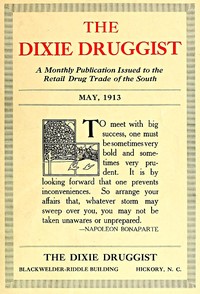
Themes, characters and key ideas in The Dixie Druggist, May, 1913: A Monthly Publication Issued to the Retail Drug Trade of the South, written by Chaptra AI.
- about 1 hours
- intermediate
- informative
- concerned
- advocative
The Dixie Druggist, May, 1913, is a pivotal historical publication offering a window into the early 20th-century pharmaceutical industry in the American South. This issue primarily addresses the significant challenges faced by retail druggists, particularly the perceived 'crisis' stemming from declining prescription sales due to evolving medical practices and the rise of synthetic drugs. Beyond highlighting these professional anxieties, the magazine advocates strongly for ethical conduct, professional unity, and proactive legislative engagement to safeguard the interests of pharmacists. It serves as both an informational resource and a call to action, reflecting the period's struggle to adapt traditional pharmacy to modern medical science.
“"Is There a Crisis in the Drug Business"”
Key themes
- Economic Challenges and Adaptation
- A central theme is the economic 'crisis' facing retail druggists, primarily driven by declining prescription sales. This is attributed to the rise of medical specialists, hospital-based dispensing, and the increasing use of pre-manufactured synthetic drugs. The magazine explores how these external forces necessitate adaptation within the traditional pharmacy business model, pushing pharmacists to consider new roles or business strategies beyond compounding.
- Professional Ethics and Integrity
- The publication strongly emphasizes that maintaining high ethical standards is paramount for the pharmacy profession. In the face of economic pressures and changing medical practices, the magazine argues that pharmacists must uphold their professional integrity to retain public trust and distinguish themselves, suggesting that ethical conduct is not just a moral imperative but also a strategic business necessity for survival and respect.
- The Power of Collective Action and Advocacy
- The publication repeatedly calls for pharmacists to unite and engage in collective action, particularly in advocating for their interests legislatively. This theme highlights a growing awareness that individual efforts are insufficient to address systemic problems and that organized professional bodies are essential for influencing policy and protecting the profession's future. It underscores the importance of professional associations in a rapidly changing regulatory and economic environment.
Worth discussing
How do the challenges faced by druggists in 1913 parallel or diverge from challenges faced by small businesses or specialized professions today?
Chapter-by-chapter breakdowns, character arcs and the full thematic analysis come with a free account.
Discussions
No one has started one yet
Questions this book opens up
No discussions yet
Be the first to start a discussion about this book!
Sign up to start the discussionReviews
No reviews yet
Be the first to review this book!