
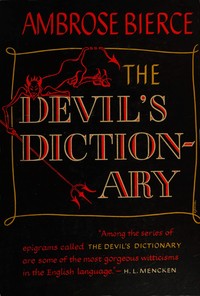
The Devil's Dictionary
Written by Ambrose Bierce
Chaptra reads alongside you — AI insights, chapter breakdowns and reader discussions for every book. Join free
About this book
Reading guide
Themes, characters and key ideas in The Devil's Dictionary, written by Chaptra AI.
- about 8 hours
- advanced
- satirical
- cynical
- humorous
Ambrose Bierce's "The Devil's Dictionary" is a groundbreaking satirical reference work that redefines common words with dark humor and biting cynicism. Originally published incrementally, this unique dictionary serves as a profound critique of human nature, society, politics, and religion through its epigrammatic entries. Each definition, often complemented by satirical verses, unmasks the absurdities, hypocrisies, and inherent flaws Bierce perceived in humanity and its institutions. It stands as a timeless commentary, blending wit with philosophical insights to challenge conventional wisdom and expose the darker truths beneath societal facades. The book's distinctive format allows for a continuous stream of sardonic observations, making it both a humorous read and a profound reflection on the human condition.
“CYNIC, n. A blackguard whose faulty vision sees things as they are, not as they ought to be. Hence the custom among the Scythians of plucking out a cynic's eyes to improve his vision.”
Key themes
- Cynicism and Misanthropy
- This is the overarching theme of the dictionary. Bierce's definitions consistently reflect a deep distrust of human motives and institutions, portraying humanity as inherently flawed, selfish, and often foolish. He sees little good in human nature, and his humor often derives from this bleak outlook.
- Hypocrisy and False Morality
- Bierce relentlessly exposes the gap between professed ideals and actual behavior, particularly in the realms of religion, ethics, and social conduct. He critiques the superficiality of conventional morality and the ease with which individuals and institutions rationalize their self-serving actions.
- The Absurdity of War and Politics
- Having served in the Civil War, Bierce's views on conflict are particularly scathing. He portrays war not as glorious or heroic, but as a senseless, brutal, and often politically manipulated endeavor. Similarly, politics is depicted as a realm of deception, self-interest, and incompetence.
Worth discussing
How does Bierce's dictionary format enhance or limit his satirical critique compared to a traditional narrative?
Chapter-by-chapter breakdowns, character arcs and the full thematic analysis come with a free account.
Discussions
No one has started one yet
Questions this book opens up
No discussions yet
Be the first to start a discussion about this book!
Sign up to start the discussionReviews
No reviews yet
Be the first to review this book!