
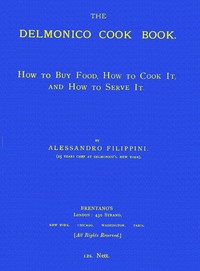
The Delmonico Cook Book: How to Buy Food, How to Cook It, and How to Serve It.
Written by Alexander Filippini
Chaptra reads alongside you — AI insights, chapter breakdowns and reader discussions for every book. Join free
About this book
Reading guide
Themes, characters and key ideas in The Delmonico Cook Book: How to Buy Food, How to Cook It, and How to Serve It., written by Chaptra AI.
- about 12 hours
- intermediate
- informative
- elegant
- historical
The Delmonico Cook Book: How to Buy Food, How to Cook It, and How to Serve It" by Alexander Filippini is a seminal late 19th-century culinary guide that extends beyond a mere recipe collection. Drawing on Filippini's expertise from the famed Delmonico's restaurant, it offers a comprehensive education in the art of sophisticated dining, from meticulous ingredient selection to elegant presentation. The book not only provides a vast array of recipes but also imparts foundational knowledge on market shopping, kitchen organization, and serving etiquette, reflecting the high standards of American gastronomy during the Gilded Age. It serves as both a practical manual for culinary aspirants and a rich historical document illuminating the era's food culture and social customs.
“The true art of gastronomy begins not in the kitchen, but in the market, with the careful selection of nature's finest offerings.”
Key themes
- Culinary Excellence and Artistry
- This theme is paramount, emphasizing the relentless pursuit of perfection in every facet of food preparation and presentation. Filippini elevates cooking from a mere domestic task to a refined art form, demanding skill, unwavering dedication, and a profound appreciation for quality. It reflects a societal value placed on high-quality dining experiences as a mark of culture and achievement.
- Historical Gastronomy and Social Status
- The book serves as an invaluable historical record of late 19th-century American dining, meticulously documenting the prevailing tastes, available ingredients, and culinary trends of the Gilded Age. It profoundly illustrates how food and dining etiquette were integral components for demonstrating wealth, sophistication, and social standing during a period of rapid economic growth and social stratification.
- Education and Mastery of Craft
- Filippini's work is fundamentally didactic, aiming to educate the reader not just in 'what' to cook, but comprehensively in 'how' and 'why' specific techniques and choices are made. It firmly underscores the belief that culinary skill is a profound craft that can be learned, honed, and perfected through diligent study, rigorous practice, and unwavering adherence to established principles and best practices.
Worth discussing
How does Filippini's emphasis on ingredient sourcing and seasonality reflect the culinary landscape and societal values of the late 19th century compared to contemporary food culture?
Chapter-by-chapter breakdowns, character arcs and the full thematic analysis come with a free account.
Discussions
No one has started one yet
Questions this book opens up
No discussions yet
Be the first to start a discussion about this book!
Sign up to start the discussionReviews
No reviews yet
Be the first to review this book!