
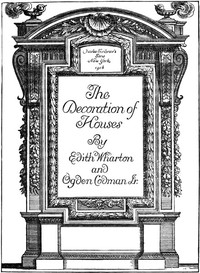
The Decoration of Houses
Written by Edith Wharton,Ogden Codman
Chaptra reads alongside you — AI insights, chapter breakdowns and reader discussions for every book. Join free
About this book
Reading guide
Themes, characters and key ideas in The Decoration of Houses, written by Chaptra AI.
- about 8 hours
- advanced
- instructive
- critical
- authoritative
Edith Wharton and Ogden Codman's "The Decoration of Houses" is a seminal late 19th-century guide that revolutionized interior design by advocating for an architecturally grounded approach. The authors critique the prevalent trend of superficial ornamentation, arguing instead for the integration of decorative elements with a building's inherent structural features. Emphasizing historical principles and mastery of proportion, the book champions the creation of aesthetically pleasing and functional spaces that reflect a cohesive understanding between interior and exterior design. It posits that a deep appreciation for architectural history is crucial for achieving truly harmonious and enduring domestic aesthetics, rejecting the modern separation of architecture from decoration.
“No amount of applied ornamentation can redeem a fundamentally ill-proportioned room.”
Key themes
- Architectural Integrity
- This is the foundational theme, asserting that interior decoration must be an organic extension of a building's architecture, not a superficial addition. The book argues that true beauty arises when decorative elements harmonize with the structural form, purpose, and historical context of a space. It critiques the separation of decoration from architectural design as leading to incoherent and aesthetically unsound results.
- Historical Understanding and Precedent
- The authors stress the vital importance of studying historical styles and architectural principles, not for mere imitation, but to grasp the underlying rules of good design. They argue that an informed appreciation of how past eras solved design challenges provides an essential toolkit for creating effective and beautiful modern spaces, preventing the pitfalls of uninformed eclecticism.
- Functionalism and Proportion
- Wharton and Codman champion the idea that design should prioritize functionality and proper proportion. They argue that a space must first serve its intended purpose efficiently and then be embellished in a way that enhances, rather than detracts from, its form. Mastery of architectural proportion is presented as the key to creating aesthetically balanced and comfortable environments.
Worth discussing
How relevant are Wharton and Codman's principles of architectural integrity in contemporary interior design?
Chapter-by-chapter breakdowns, character arcs and the full thematic analysis come with a free account.
Discussions
No one has started one yet
Questions this book opens up
No discussions yet
Be the first to start a discussion about this book!
Sign up to start the discussionReviews
No reviews yet
Be the first to review this book!