
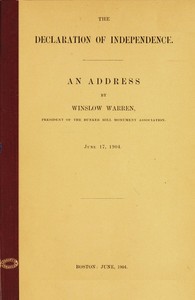
The Declaration of Independence: An Address
Written by Winslow Warren
Chaptra reads alongside you — AI insights, chapter breakdowns and reader discussions for every book. Join free
About this book
Reading guide
Themes, characters and key ideas in The Declaration of Independence: An Address, written by Chaptra AI.
- about 3 hours
- intermediate
- Reflective
- Patriotic
- Analytical
Winslow Warren's "The Declaration of Independence: An Address" is a poignant early 20th-century reflection on America's foundational document, delivered during a Bunker Hill commemoration. Serving as the President of the Bunker Hill Monument Association, Warren meticulously traces the historical trajectory leading to the Declaration, emphasizing its core tenets of liberty, self-governance, and individual rights. The address asserts the Declaration's timeless truths, advocating for their enduring relevance and application to contemporary and future societal challenges. Notably, Warren connects these revolutionary principles to the early 20th-century struggles between labor and capital, positioning the Declaration as a guiding light for navigating modern complexities. It serves as both a historical account and a call to uphold the nation's founding ideals.
“The Declaration of Independence stands not merely as a historical document, but as a living testament to universal truths of liberty and human dignity.”
Key themes
- Foundational Principles and Enduring Relevance
- This theme explores Warren's central argument that the principles embedded in the Declaration of Independence—such as liberty, individual rights, and the right to self-governance—are not merely historical artifacts but timeless truths applicable across generations. He posits that these ideals provide an essential moral and political compass for navigating new challenges.
- Historical Legacy and National Identity
- Warren's address actively participates in the construction and reinforcement of American national identity through the lens of its revolutionary past. He emphasizes the sacrifices of the Founders and the significance of events like Bunker Hill, framing them as crucial components of a shared national heritage that demands reverence and continued commitment from future generations.
- Self-Governance and Individual Rights
- Central to the Declaration and Warren's address is the concept of popular sovereignty—the right of a people to govern themselves—and the inherent, inalienable rights of individuals. Warren explores how these ideas fueled the Revolution and insists on their continued importance as safeguards against tyranny and cornerstones of a just society.
Worth discussing
How does Warren connect the 18th-century Declaration of Independence to the specific societal challenges (e.g., labor and capital) of the early 20th century?
Chapter-by-chapter breakdowns, character arcs and the full thematic analysis come with a free account.
Discussions
No one has started one yet
Questions this book opens up
No discussions yet
Be the first to start a discussion about this book!
Sign up to start the discussionReviews
No reviews yet
Be the first to review this book!