
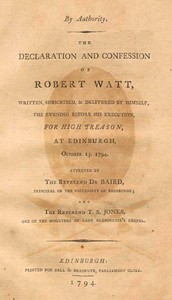
The declaration and confession of Robert Watt : $b Written, subscribed, & delivered by himself, the evening before his execution, for high treason, at Edinburgh, October 15, 1794
Written by Robert Watt
Chaptra reads alongside you — AI insights, chapter breakdowns and reader discussions for every book. Join free
About this book
Reading guide
Themes, characters and key ideas in The declaration and confession of Robert Watt : $b Written, subscribed, & delivered by himself, the evening before his execution, for high treason, at Edinburgh, October 15, 1794, written by Chaptra AI.
- about 4 hours
- intermediate
- somber
- reflective
- penitent
Robert Watt's 'Declaration and Confession' is a poignant, first-person account penned on the eve of his execution for high treason in 1794 Edinburgh. It chronicles his life's trajectory from devout beginnings to his entanglement in a reformist conspiracy, driven by ambition and a perceived need for societal change. The document serves as both a personal testament of remorse and a cautionary tale, reflecting on his 'backsliding' from religious conviction into political agitation. Watt meticulously details his intentions for societal reform, involvement in secret societies, and the ultimate tragic consequences of his actions, seeking forgiveness and redemption in the face of death.
“My ambition, a serpent in my breast, led me astray from the paths of righteousness and into the treacherous currents of political intrigue.”
Key themes
- Political Treason and Dissent
- This is the central theme, as Watt is condemned for high treason. The book explores the motivations behind challenging state authority, the methods employed by dissenters (secret societies, agitation), and the severe consequences for those who transgress. It delves into the fine line between legitimate reform and sedition, particularly in a period rife with revolutionary fervor.
- Religious Conviction and Apostasy
- Watt frames his political downfall through a strong religious lens, presenting it as a 'backsliding' from early, devout convictions. The theme explores the tension between spiritual adherence and worldly ambition, the concept of sin and redemption, and the psychological burden of guilt. His confession is as much a plea for divine forgiveness as it is for human understanding.
- Remorse and Redemption
- As a confession delivered on the eve of execution, the themes of remorse and the desperate hope for redemption are paramount. Watt's entire declaration is an act of penitence, a final attempt to seek forgiveness from God and man. It explores the psychological process of confronting one's failures, acknowledging culpability, and seeking a measure of peace or absolution before death.
Worth discussing
To what extent can Watt's actions be understood as genuine reformist zeal versus self-serving ambition?
Chapter-by-chapter breakdowns, character arcs and the full thematic analysis come with a free account.
Discussions
No one has started one yet
Questions this book opens up
No discussions yet
Be the first to start a discussion about this book!
Sign up to start the discussionReviews
No reviews yet
Be the first to review this book!