
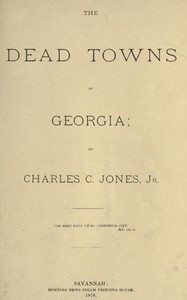
The dead towns of Georgia
Written by Charles C. Jones
Chaptra reads alongside you — AI insights, chapter breakdowns and reader discussions for every book. Join free
About this book
Reading guide
Themes, characters and key ideas in The dead towns of Georgia, written by Chaptra AI.
- about 12 hours
- advanced
- Melancholy
- Historical
- Reflective
Charles C. Jones, Jr.'s "The Dead Towns of Georgia" is a poignant late 19th-century historical exploration of Georgia's forgotten communities, charting their rise, struggles, and ultimate decay. The author meticulously chronicles the fragmented histories of these once-vibrant locales, emphasizing the human endeavor against harsh conditions and conflicts, and the inevitable passage of time. Through detailed accounts, Jones aims to preserve the memory of these silent towns, reflecting on the challenges faced by early settlers and the significance of honoring the past. The book opens with a reflective preface and an in-depth look at Ebenezer, a community founded by persecuted Saltzburgers, setting the stage for a broader narrative of resilience, loss, and historical remembrance across the Georgian landscape.
“"To remember is to honor; to forget is to allow the very foundations of our heritage to crumble into dust."”
Key themes
- The Ephemerality of Human Endeavor
- This is the central theme, explored through the rise and fall of each town. Jones consistently highlights how even the most ambitious and well-intentioned human efforts can be undone by time, nature, economic shifts, or unforeseen circumstances. The physical decay of the towns serves as a powerful metaphor for this transience.
- The Importance of Memory and Historical Preservation
- Jones explicitly states his purpose is to preserve the fragmented memories of these towns. The act of writing the book itself is an embodiment of this theme, arguing that understanding and remembering the past is crucial for collective identity and learning from historical cycles.
- Human Resilience and Struggle Against Adversity
- Despite the ultimate decay of the towns, Jones consistently emphasizes the incredible resilience, hope, and determination of the early settlers. Their struggles against harsh environmental conditions, disease, economic hardship, and conflict underscore the indomitable human spirit.
Worth discussing
How does Jones use the concept of 'dead towns' to explore broader themes of human transience and the passage of time?
Chapter-by-chapter breakdowns, character arcs and the full thematic analysis come with a free account.
Discussions
No one has started one yet
Questions this book opens up
No discussions yet
Be the first to start a discussion about this book!
Sign up to start the discussionReviews
No reviews yet
Be the first to review this book!