
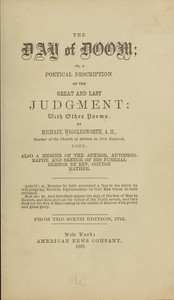
The Day of Doom; Or, A Poetical Description of the Great and Last Judgment: With Other Poems
Written by Michael Wigglesworth
Chaptra reads alongside you — AI insights, chapter breakdowns and reader discussions for every book. Join free
About this book
Reading guide
Themes, characters and key ideas in The Day of Doom; Or, A Poetical Description of the Great and Last Judgment: With Other Poems, written by Chaptra AI.
- about 8 hours
- advanced
- somber
- didactic
- fearful
Michael Wigglesworth's "The Day of Doom" is a seminal 17th-century Puritan poem that graphically details the Last Judgment, serving as a powerful theological treatise and a warning to its contemporary audience. Through vivid, often terrifying imagery, the poem depicts Christ's sudden arrival as Judge, the resurrection of the dead, and the meticulous separation of humanity into the eternally saved and the damned. It systematically addresses and refutes various pleas for mercy from different categories of sinners, firmly upholding the tenets of Calvinist predestination and divine justice. The work profoundly influenced early American religious thought, instilling a deep sense of accountability and the dire consequences of unrepentant sin within Puritan communities.
“For at midnight break of day, when all men living sleep, And many a soul for sin by stealth, doth secret pleasure keep, Then shall the Lord to judgment come, and on the clouds appear, With trumpets loud, and voice of God, to fill the world with fear.”
Key themes
- Divine Justice and Judgment
- This is the central theme, exploring God's absolute and unwavering justice as manifested in the Last Judgment. The poem portrays Christ as an impartial Judge who meticulously weighs every action and thought, delivering sentences based on eternal decrees. It emphasizes that divine justice is beyond human questioning or appeal.
- Sin and Damnation
- The poem extensively details the nature of sin, both original and actual, and its inevitable consequence: eternal damnation. It illustrates various forms of sin – hypocrisy, procrastination, reliance on good works rather than grace – and portrays the horrifying reality of unending torment for the unredeemed.
- Human Accountability and the Fear of God
- The poem serves as a powerful reminder of individual accountability before a wrathful God. It aims to instill a profound fear of divine judgment, thereby motivating readers to live righteously and seek salvation according to Puritan tenets. Every action, thought, and omission is recorded and will be judged.
Worth discussing
How does 'The Day of Doom' reflect the core theological tenets of 17th-century Puritanism, particularly regarding predestination and divine justice?
Chapter-by-chapter breakdowns, character arcs and the full thematic analysis come with a free account.
Discussions
No one has started one yet
Questions this book opens up
No discussions yet
Be the first to start a discussion about this book!
Sign up to start the discussionReviews
No reviews yet
Be the first to review this book!