
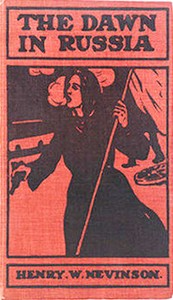
The dawn in Russia
Written by Henry Woodd Nevinson
Chaptra reads alongside you — AI insights, chapter breakdowns and reader discussions for every book. Join free
About this book
Reading guide
Themes, characters and key ideas in The dawn in Russia, written by Chaptra AI.
- about 10 hours
- intermediate
- turbulent
- somber
- urgent
Henry Woodd Nevinson's "The Dawn in Russia" offers a vivid, firsthand account of the tumultuous Russian Revolution of 1905-1906, serving as a vital historical document from an eyewitness perspective. As a special correspondent, Nevinson chronicles the escalating unrest, focusing on the burgeoning labor movements, widespread strikes, and the desperate socio-political climate that galvanized the populace against the Tsarist regime. The narrative commences with the aftermath of the devastating Russo-Japanese War and details pivotal events like political assassinations and the infamous Bloody Sunday, which ignited the revolutionary fervor. Central to Nevinson's observations is Father George Gapon, depicted as a charismatic figure instrumental in uniting and mobilizing workers in their fervent quest for radical change and an end to imperial oppression.
“"The dawn was not yet the full day, but the first rays had pierced the thickest darkness, revealing the outlines of a new world."”
Key themes
- Revolution and Social Change
- This is the central theme, exploring the causes, manifestations, and immediate consequences of the Russian Revolution of 1905. Nevinson details how deep-seated grievances, exacerbated by war and oppression, lead to a widespread demand for fundamental societal transformation.
- Oppression and Injustice
- The pervasive theme of the Tsarist regime's autocratic rule, its suppression of basic freedoms, and the socio-economic exploitation of the working class. Nevinson highlights how this systemic injustice fuels the revolutionary spirit.
- The Power of the People / Collective Action
- This theme celebrates the strength and agency of ordinary individuals when united in a common cause. Nevinson emphasizes how the collective action of workers, despite immense risks, becomes a potent force for challenging entrenched power.
Worth discussing
How does Nevinson's role as a special correspondent influence the narrative and the reader's perception of events?
Chapter-by-chapter breakdowns, character arcs and the full thematic analysis come with a free account.
Discussions
No one has started one yet
Questions this book opens up
No discussions yet
Be the first to start a discussion about this book!
Sign up to start the discussionReviews
No reviews yet
Be the first to review this book!