
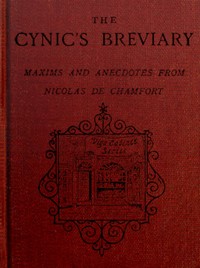
The cynic's breviary: Maxims and anecdotes from Nicolas de Chamfort
Written by Sébastien-Roch-Nicolas Chamfort
Chaptra reads alongside you — AI insights, chapter breakdowns and reader discussions for every book. Join free
About this book
Reading guide
Themes, characters and key ideas in The cynic's breviary: Maxims and anecdotes from Nicolas de Chamfort, written by Chaptra AI.
- about 8 hours
- advanced
- cynical
- witty
- philosophical
Chamfort's "The Cynic's Breviary" is a trenchant collection of 18th-century maxims and anecdotes, offering a profoundly cynical yet insightful dissection of human nature and society. Through sharp wit and sardonic observations, Chamfort exposes the vanity, hypocrisy, and inherent contradictions of individuals and the social structures they inhabit. The book serves as a timeless critique of human folly, exploring themes of love, ambition, morality, and the pursuit of happiness with a disillusioned gaze. It stands as both a brilliant display of aphoristic wisdom and a valuable historical document reflecting the intellectual ferment of pre-Revolutionary France.
“Most men die of their remedies, and not of their diseases.”
Key themes
- Human Folly and Hypocrisy
- This is the cornerstone of Chamfort's philosophy. He relentlessly exposes the vanity, self-deception, and moral inconsistencies that drive human behavior. He argues that much of what passes for virtue or wisdom is merely a facade, masking self-interest or ignorance.
- Societal Critique and Corruption
- Chamfort's work offers a scathing critique of the aristocratic society of his time, but his observations extend to the corrupting influence of wealth, power, and social hierarchy in general. He highlights how institutions and conventions often stifle genuine feeling and promote superficiality.
- Disillusionment in Love and Relationships
- Chamfort approaches love, friendship, and other personal bonds with a profound sense of disillusionment. He often reduces love to its physical or self-serving components, stripping away romanticized notions and exposing the underlying egoism or transience.
Worth discussing
Is Chamfort's cynicism a realistic assessment of human nature or an overly pessimistic one? Provide examples.
Chapter-by-chapter breakdowns, character arcs and the full thematic analysis come with a free account.
Discussions
No one has started one yet
Questions this book opens up
No discussions yet
Be the first to start a discussion about this book!
Sign up to start the discussionReviews
No reviews yet
Be the first to review this book!