
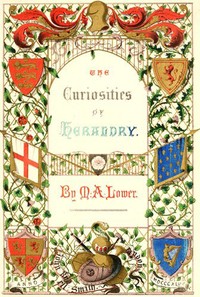
The Curiosities of Heraldry
Written by Mark Antony Lower
Chaptra reads alongside you — AI insights, chapter breakdowns and reader discussions for every book. Join free
About this book
Reading guide
Themes, characters and key ideas in The Curiosities of Heraldry, written by Chaptra AI.
- about 8 hours
- advanced
- Informative
- Historical
- Academic
“The Curiosities of Heraldry” by Mark Antony Lower is a mid-19th-century historical treatise dedicated to re-establishing the profound significance of heraldry as a vital field of study. Lower passionately challenges the prevailing misconception that heraldry is merely an outdated collection of symbols, instead presenting it as an essential key to understanding genealogy, medieval social structures, and broader historical contexts. Through a detailed exploration enriched with numerous historical anecdotes, the book delves into the principles, practices, and profound utility of heraldic designs. It asserts heraldry's poetic and practical aspects, inviting readers into a thorough investigation of its deep roots in the social fabric of medieval society and its enduring relevance.
“To dismiss heraldry as a mere antiquated collection of symbols is to overlook a profound language of history, lineage, and social fabric.”
Key themes
- The Value of Historical Study and Preservation
- Lower's foundational argument is that historical disciplines, particularly those deemed archaic like heraldry, hold immense, often underestimated, value. He champions the meticulous study of the past as essential for understanding identity, lineage, and societal evolution, actively countering the dismissal of such studies as mere antiquarianism. This theme underscores the importance of not losing historical languages and symbolic systems, advocating for their continued relevance.
- Symbolism and Meaning
- At its core, heraldry is a sophisticated language of symbols. Lower delves into how intricate designs, colors (tinctures), and charges communicate complex information about family lineage, achievements, alliances, and status. The book explores the deliberate creation and evolution of these symbols, demonstrating their power to convey meaning across generations and cultures, and the critical importance of their accurate interpretation to unlock historical truths.
- Social Structure and Identity in Medieval Society
- Heraldry was not merely decorative; it was a fundamental component of medieval social organization and personal identity, particularly among the nobility and gentry. Lower illustrates how heraldic devices served as crucial visual identifiers on battlefields, in tournaments, and on official documents, reinforcing hierarchies, distinguishing families, and signifying individual status and allegiances. The book implicitly explores how these symbols shaped and reflected the aristocratic ethos and the intricate social tapestry of the era.
Worth discussing
How does Lower's argument for the 'utility' of heraldry resonate with modern perceptions of historical studies?
Chapter-by-chapter breakdowns, character arcs and the full thematic analysis come with a free account.
Discussions
No one has started one yet
Questions this book opens up
No discussions yet
Be the first to start a discussion about this book!
Sign up to start the discussionReviews
No reviews yet
Be the first to review this book!