
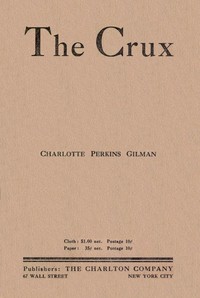
The Crux: A Novel
Written by Charlotte Perkins Gilman
Chaptra reads alongside you — AI insights, chapter breakdowns and reader discussions for every book. Join free
About this book
Read it with a club
Chaptra's fiction clubs — small groups reading the same books and talking as they go.


CraxMe Readers Book Club
Fiction
- 385 members
- 227 discussions
- Started December 2025
Welcome to the Readers Book Club. This is an informal group for like-minded people, where you can discuss books, share and recommend, track your reading progress, and lots more. Discuss Books — all about books. Discuss a particular book or genre, share your favourite quotes. Book Reviews — loved a book and highly recommend it? Or was it just average? Share your review and discuss with fellow readers. (May contain spoilers.) Group Reads — what is a book club without a group read! Buddy Reads — planning to read a book and looking for someone to read it with? Post in the Buddy Read request thread, find a reading buddy, and start discussing.
Read The Crux: A Novel alongside people who are reading it too.
Also here: Doorstops, First Lines Club
Chaptra Prime — paid clubs, every club feature, and unlimited reading support, for $5 a month or $60 once.
See PrimeReading guide
Themes, characters and key ideas in The Crux: A Novel, written by Chaptra AI.
- about 6 hours
- intermediate
- thought-provoking
- didactic
- social commentary
Charlotte Perkins Gilman's "The Crux" is an early 20th-century novel centered on Vivian Lane, a young woman in a conservative New England town grappling with restrictive societal expectations for women. The narrative follows Vivian's journey to define her own path, challenging traditional roles regarding education, marriage, and personal purpose. As she navigates local gossip and the pressures of her upbringing, Vivian’s desire for independence and self-fulfillment intensifies, setting the stage for a pivotal decision that will shape her future. The novel critically examines the social limitations placed on women and advocates for their intellectual and personal autonomy. It also provocatively explores themes of heredity and social responsibility through its central conflict.
“"A woman must be more than a wife and mother; she must be herself."”
Key themes
- Women's Roles and Independence
- This is a central theme, exploring the restrictive roles assigned to women in early 20th-century society and the burgeoning desire for independence and self-fulfillment. Gilman critiques the limitations of domesticity and advocates for women's intellectual and economic autonomy.
- Eugenics and Social Responsibility
- A controversial but pivotal theme, reflecting Gilman's belief in eugenics as a means of social improvement. The novel explores the idea of 'responsible' reproduction, where individuals are morally obligated to consider the hereditary traits of potential partners for the betterment of the human race.
- Societal Expectations vs. Individual Aspiration
- This theme explores the tension between the collective norms and pressures of a community and an individual's unique desires and ambitions. Vivian's struggle to reconcile her longing for independence with the conservative expectations of her town forms the core of the narrative.
Worth discussing
How does Gilman portray the societal expectations for women in early 20th-century New England, and how do these expectations limit Vivian's choices?
Chapter-by-chapter breakdowns, character arcs and the full thematic analysis come with a free account.
Discussions
No one has started one yet
Questions this book opens up
No discussions yet
Be the first to start a discussion about this book!
Sign up to start the discussionReviews
No reviews yet
Be the first to review this book!