
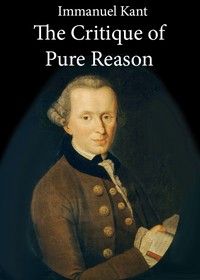
The Critique of Pure Reason
Written by Immanuel Kant
Not rated yet — tap a star to review it
Chaptra reads alongside you — AI insights, chapter breakdowns and reader discussions for every book. Join free
About this book
"The Critique of Pure Reason" by Immanuel Kant is a foundational philosophical text written during the late 18th century. This critically important work examines the limits and scope of human understanding and knowledge, especially focusing on metaphysics and the distinction between a priori (knowledge independent of experience) and a posteriori (knowledge dependent on experience) cognitions. The opening of the book introduces Kant's ambitious project of critically analyzing the capabilities of reason itself. He establishes that while all knowledge begins with experience, a portion of it can exist independently of experience. Kant delves into the significance of pure a priori knowledge, proposing that certain cognitive faculties allow humans to form necessary and universal judgments that are not derivable from empirical observation. He outlines a systematic approach toward metaphysics which, instead of making unfounded assertions, should investigate the very nature and limits of our reason, establishing a solid epistemological foundation before attempting any metaphysical inquiry.
Reading guide
Themes, characters and key ideas in The Critique of Pure Reason, written by Chaptra AI.
A reading guide for this book hasn't been written yet. Chaptra builds one the first time a reader opens it.
Chapter-by-chapter breakdowns, character arcs and the full thematic analysis come with a free account.
Discussions
No one has started one yet
No discussions yet
Be the first to start a discussion about this book!
Sign up to start the discussionReviews
No reviews yet
Be the first to review this book!