
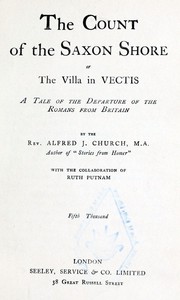
The Count of the Saxon Shore; or The Villa in Vectis.: A Tale of the Departure of the Romans from Britain
Written by Ruth Putnam,Alfred John Church
Chaptra reads alongside you — AI insights, chapter breakdowns and reader discussions for every book. Join free
About this book
Reading guide
Themes, characters and key ideas in The Count of the Saxon Shore; or The Villa in Vectis.: A Tale of the Departure of the Romans from Britain, written by Chaptra AI.
- about 8 hours
- intermediate
- historical
- epic
- somber
Set against the tumultuous backdrop of the 5th century A.D., 'The Count of the Saxon Shore' chronicles the final days of Roman rule in Britain. The narrative centers on a Roman official, the Count, tasked with defending the vulnerable Saxon Shore and specifically a villa on Vectis (Isle of Wight) from relentless barbarian incursions. As the official Roman legions withdraw, the story explores the struggles of those left behind, caught between a fading imperial power and the rising tide of Anglo-Saxon invaders. It is a tale of duty, survival, and the profound societal shifts that marked the birth of medieval Britain.
“"The light of Rome, once so bright, now flickers like a dying lamp on these distant shores."”
Key themes
- The Decline and Fall of Empire
- This theme is central, exploring the multifaceted process of Roman imperial collapse in a distant province. It examines the breakdown of infrastructure, the erosion of authority, the withdrawal of military support, and the psychological impact on those accustomed to imperial order. The novel vividly portrays the sense of abandonment and the dawning realization that a once-invincible power is fading.
- Identity and Loyalty
- The novel deeply explores what it means to be 'Roman' or 'British' during a period when these identities were fluid and contested. Characters grapple with where their primary loyalty lies—to a distant, failing empire, to their immediate community, or to the ancestral land. It examines the formation of new identities in the crucible of cultural collision.
- The Clash of Cultures and Survival
- The narrative vividly portrays the violent collision between the established, if weakening, Roman-British culture and the aggressive, emergent Anglo-Saxon culture. It examines not just military conflict, but also the fundamental differences in societal structure, values, and worldview, and the desperate measures taken by those caught in the middle to survive.
Worth discussing
How does the novel portray the concept of 'Roman identity' versus 'British identity' during the decline of the Empire?
Chapter-by-chapter breakdowns, character arcs and the full thematic analysis come with a free account.
Discussions
No one has started one yet
Questions this book opens up
No discussions yet
Be the first to start a discussion about this book!
Sign up to start the discussionReviews
No reviews yet
Be the first to review this book!