
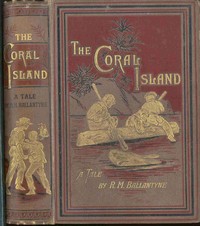
The Coral Island: A Tale of the Pacific Ocean
Written by R. M. (Robert Michael) Ballantyne
Chaptra reads alongside you — AI insights, chapter breakdowns and reader discussions for every book. Join free
About this book
Read it with a club
Chaptra's history and war clubs — small groups reading the same books and talking as they go.


Footnotes & Firefights
History and war
- 4 members
- 4 discussions
- Active Sep 11
Military history, from grand strategy down to the deeply boring logistics that actually decided everything. This is a Chaptra house club — set up and moderated by us to get the conversation going. Open to everyone; jump in anywhere.
Read The Coral Island: A Tale of the Pacific Ocean alongside people who are reading it too.
Also here: Empire, Reconsidered
Chaptra Prime — paid clubs, every club feature, and unlimited reading support, for $5 a month or $60 once.
See PrimeReading guide
Themes, characters and key ideas in The Coral Island: A Tale of the Pacific Ocean, written by Chaptra AI.
- about 9 hours
- intermediate
- adventurous
- optimistic
- didactic
R. M. Ballantyne's 'The Coral Island' is a classic Victorian adventure novel following three British boys – the sensible Ralph, the strong Jack, and the mischievous Peterkin – who are shipwrecked on a deserted South Pacific island. Their initial idyllic existence, characterized by resourcefulness and camaraderie, is soon challenged by encounters with various indigenous tribes and European pirates, forcing them to confront the realities of survival and the clash of cultures. The narrative explores themes of innocence, friendship, and the perceived superiority of Christian civilization over 'savage' cultures, all while celebrating the spirit of exploration and resilience. Despite its dated perspectives, the book remains a foundational text in children's literature, shaping subsequent island survival narratives.
“The coral island, with its groves of palms, its dancing waves, and its bright blue sky, was a scene of perfect beauty.”
Key themes
- Innocence vs. Savagery
- This is the central thematic pillar of the novel. Ballantyne presents a stark dichotomy: the inherent goodness and Christian morality of the British boys versus the 'savagery' of the indigenous cannibals and the European pirates. The boys maintain their innocence and moral integrity throughout their trials, never succumbing to the primal urges or brutal behaviors they witness, suggesting an innate goodness or a divine protection.
- Colonialism and Imperialism
- The novel is deeply embedded in the colonial mindset of the Victorian era. It subtly and overtly champions the 'civilizing mission' of the British Empire, portraying European presence in the Pacific as bringing order, Christianity, and superior morality to 'backward' peoples. Indigenous cultures are often depicted through a lens of exoticism, fear, or paternalism, with their conflicts and practices serving to highlight the 'need' for European intervention.
- Friendship and Brotherhood
- The bond between Ralph, Jack, and Peterkin is central to their survival and the emotional core of the story. Their camaraderie, mutual support, and division of labor allow them to overcome seemingly insurmountable challenges. Their friendship is portrayed as unwavering, built on loyalty, trust, and shared experience, showcasing the power of human connection in isolation.
Worth discussing
How does 'The Coral Island' portray the concept of 'civilization' versus 'savagery'? What are the implications of these portrayals?
Chapter-by-chapter breakdowns, character arcs and the full thematic analysis come with a free account.
Discussions
No one has started one yet
Questions this book opens up
No discussions yet
Be the first to start a discussion about this book!
Sign up to start the discussionReviews
No reviews yet
Be the first to review this book!